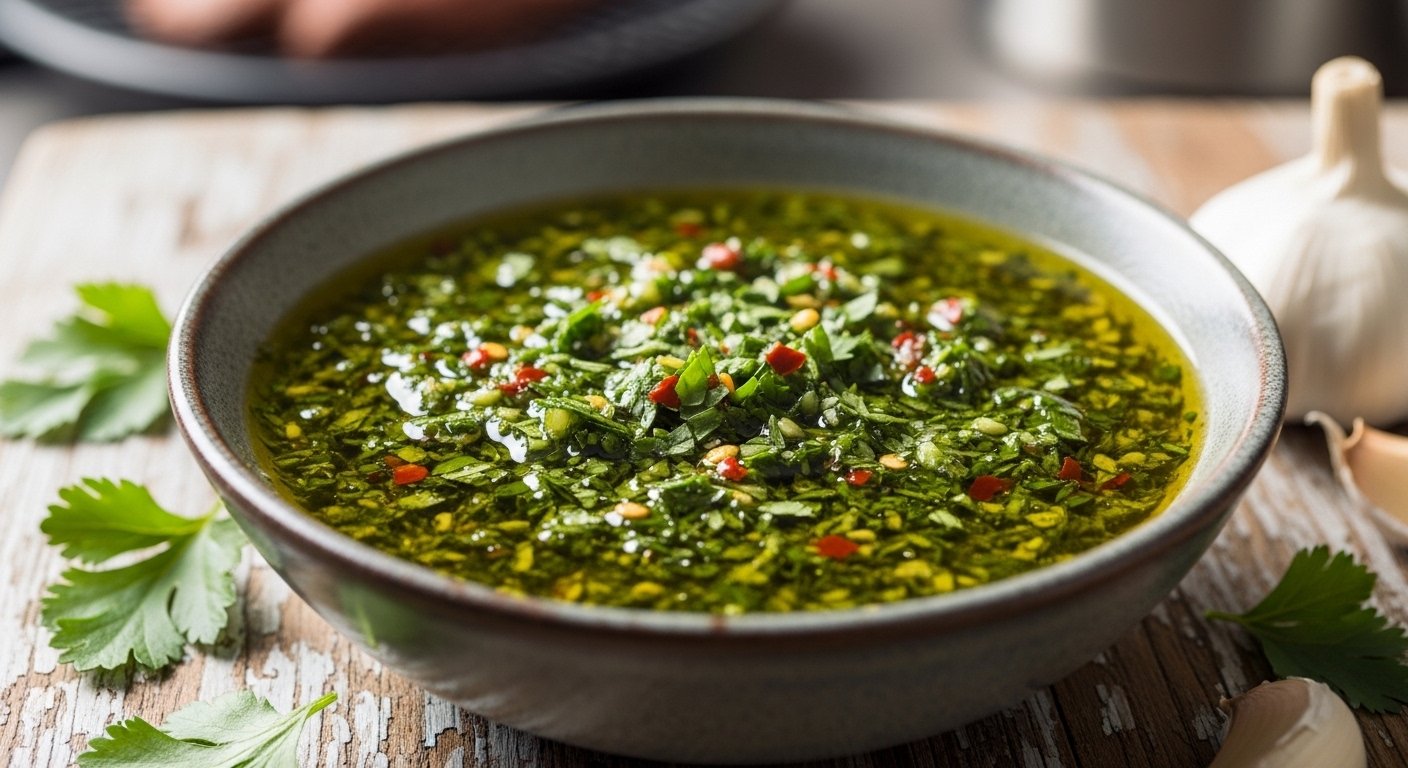
Welcome, friends! Today I’m sharing one of my favorite sauces that instantly makes any meal feel special – the best chimichurri recipe.
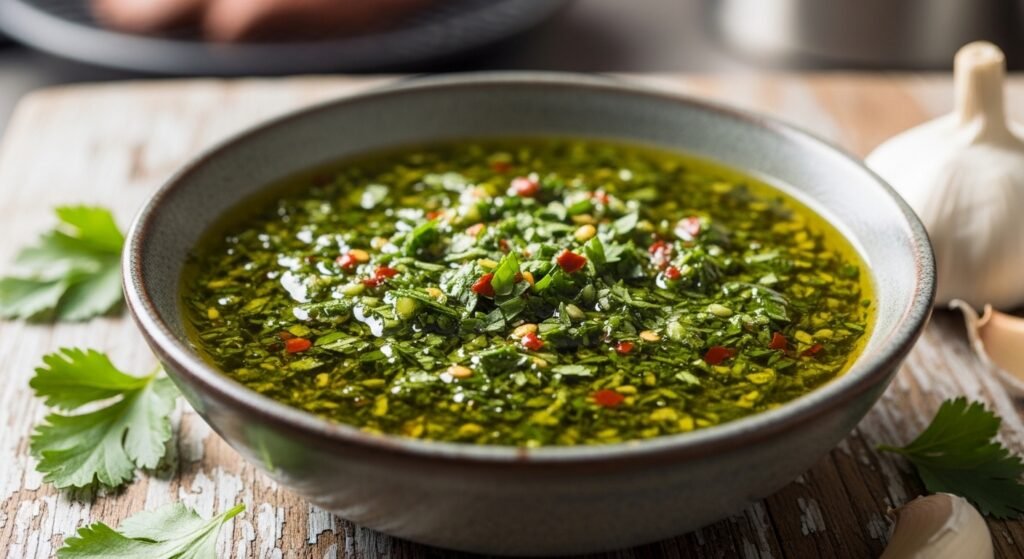
I make this bright, herby sauce often because it’s quick, fresh, and full of bold flavor. Chimichurri originally comes from Argentina and Uruguay, where it’s traditionally served with grilled meats, but honestly, I use it on so many things in my kitchen.
This sauce is vibrant, garlicky, slightly tangy, and perfectly balanced with olive oil and herbs. What I love most is how simple it is.
With just a handful of fresh ingredients and a few minutes of prep time, you can create something that elevates steak, chicken, seafood, vegetables, and even eggs.
Recipe Overview
- Cuisine: Argentine
- Prep Time: 10 minutes
- Cook Time: 0 minutes
- Total Time: 10 minutes
- Servings: 8
What Is Chimichurri Sauce?
Chimichurri is a traditional uncooked sauce made primarily from fresh herbs, garlic, olive oil, and vinegar.
It has a loose, slightly chunky texture and a bold flavor that combines herbal freshness with tangy acidity.
Unlike cooked sauces, chimichurri relies entirely on fresh ingredients. Everything is chopped, mixed, and allowed to rest so the flavors blend naturally.
The result is a bright green sauce that works beautifully as both a marinade and a finishing sauce.
In traditional South American cooking, chimichurri is often served alongside grilled steak during barbecues known as asado. The sauce cuts through the richness of the meat while adding layers of flavor.
The Origin of Chimichurri Sauce
Chimichurri comes from Argentina and Uruguay, where it is considered one of the most iconic condiments in their cuisine. The sauce has been used for generations in South American grilling traditions.
While the exact origin of the name is debated, many believe it evolved from Spanish or Basque influences during colonial times.
European immigrants brought herbs, garlic, and vinegar-based sauces to the region, which eventually evolved into what we know today as chimichurri.
Today, the sauce is enjoyed worldwide and has become a staple in many kitchens because of its versatility and fresh flavor.
Why Chimichurri Is So Popular
Chimichurri has gained popularity across the globe because it combines bold flavor with simple preparation. Many people love it because it requires no cooking, just fresh ingredients and a quick mix.
The sauce pairs well with grilled meats, roasted vegetables, sandwiches, and seafood. Its vibrant flavor profile also makes it a great alternative to heavier sauces like cream-based dressings.
Another reason chimichurri is so popular is that it fits many dietary lifestyles. It’s naturally dairy-free, gluten-free, and vegan, which makes it accessible for many different diets.
Why You’ll Love This Chimichurri Recipe
I love this recipe because it’s easy, quick, and incredibly versatile. Once you make it, you’ll probably start finding ways to add it to everything.
The fresh herbs create a bright flavor that feels light but is still powerful. Garlic adds a punch, while vinegar and lemon juice bring just the right amount of tanginess.
Another thing I appreciate about this recipe is that it stores well. I often make a jar and keep it in the fridge so I can add it to meals throughout the week.
What Makes This the Best Chimichurri Recipe
For me, the best chimichurri recipe is all about balance. Too much vinegar can overpower the herbs, and too much oil can make the sauce heavy.
This version keeps a perfect balance between herbs, acidity, and olive oil. The parsley provides freshness, garlic adds depth, and red pepper flakes bring a gentle heat.
The result is a sauce that feels vibrant and flavorful without overwhelming the dish it’s served with.
Ingredients
| Amount | Ingredient | Notes |
|---|---|---|
| 1 cup | Fresh parsley | Finely chopped |
| ½ cup | Fresh cilantro | Optional but adds flavor |
| 4 cloves | Garlic | Minced |
| ½ cup | Extra virgin olive oil | Use good quality oil |
| 2 tablespoons | Red wine vinegar | Adds acidity |
| 1 tablespoon | Lemon juice | Freshly squeezed |
| 1 teaspoon | Dried oregano | Traditional flavor |
| ½ teaspoon | Crushed red pepper flakes | Adjust to taste |
| ½ teaspoon | Salt | Adjust to preference |
| ¼ teaspoon | Black pepper | Freshly ground |
Key Ingredients for Authentic Chimichurri
Authentic chimichurri typically includes parsley, garlic, olive oil, and vinegar. These ingredients create the base flavor that defines the sauce.
Parsley gives the sauce its signature green color and fresh taste. Garlic adds strong aromatic depth, while vinegar provides acidity that balances the richness of the oil.
Olive oil brings everything together and gives the sauce its smooth texture.
Fresh Herbs Used in Chimichurri
Parsley is the most traditional herb used in chimichurri. Flat-leaf parsley works best because it has a strong flavor and a softer texture.
Some modern variations also include cilantro or oregano. Cilantro adds a citrus-like brightness, while oregano introduces a slightly earthy note.
Fresh herbs are always preferred because they create the most vibrant flavor.
Choosing the Best Olive Oil for Chimichurri
Since olive oil is the main base of the sauce, it’s important to use a good-quality extra virgin olive oil.
A high-quality oil will taste slightly fruity and smooth instead of bitter. Fresh oil also helps highlight the herbs rather than overpower them.
Using a fresh and flavorful oil can make a noticeable difference in the final taste of your chimichurri.
Garlic and Spice Balance
Garlic is one of the most important flavor components in chimichurri. It provides a strong savory punch that complements the herbs.
Red pepper flakes add subtle heat and complexity. The key is to use them in moderation so they enhance the flavor without making the sauce overly spicy.
Balancing garlic and spice helps keep the sauce flavorful yet well-rounded.
The Role of Vinegar and Citrus in Chimichurri
Acidity is what makes chimichurri taste bright and fresh. Vinegar and lemon juice help cut through the richness of olive oil and meat.
Red wine vinegar is the most traditional option, but lemon juice can add an extra layer of freshness.
Together, these ingredients create the tangy flavor that defines the sauce.
Equipment Needed to Make Chimichurri
| Amount | Equipment | Notes |
|---|---|---|
| 1 | Cutting board | For chopping herbs |
| 1 | Chef’s knife | Sharp knife works best |
| 1 | Mixing bowl | Medium size |
| 1 | Measuring spoons | For accurate amounts |
| 1 | Spoon or spatula | For mixing |
| 1 | Airtight container | For storage |
How to Make Chimichurri Sauce
Making chimichurri is very simple and requires only a few steps.
Step 1
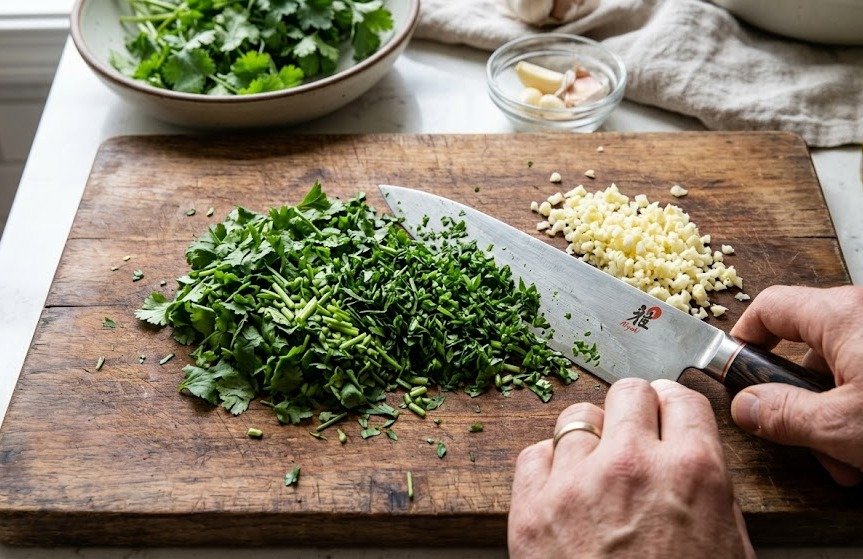
Finely chop the parsley, cilantro, and garlic on a cutting board.
Step 2
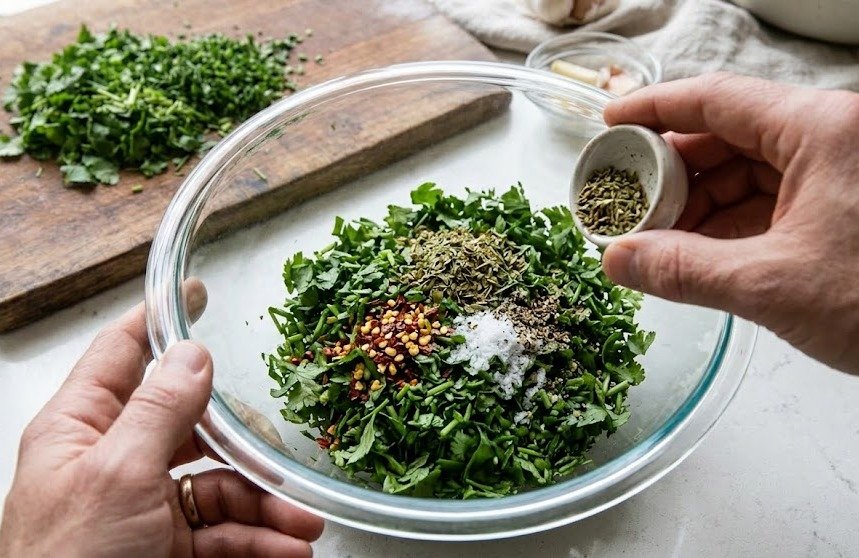
Transfer them to a mixing bowl and add oregano, red pepper flakes, salt, and black pepper.
Step 3
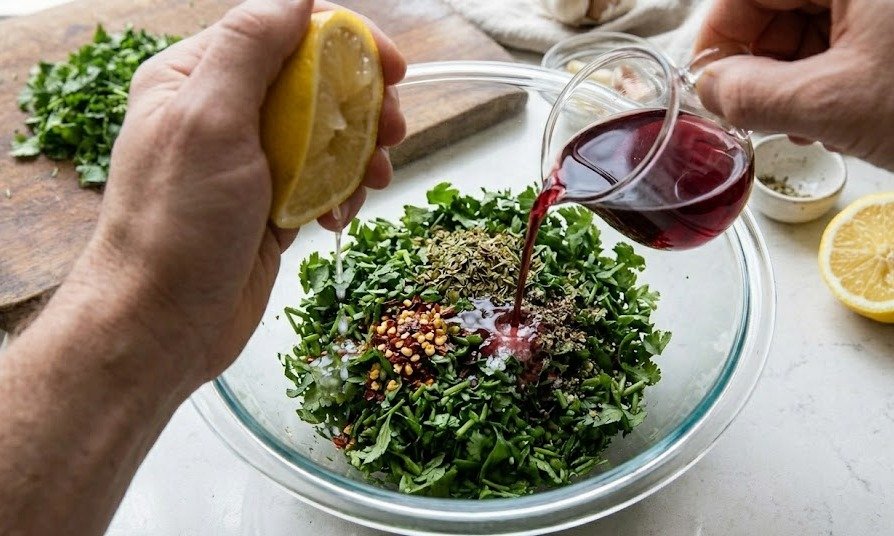
Pour in the red wine vinegar and fresh lemon juice.
Step 4
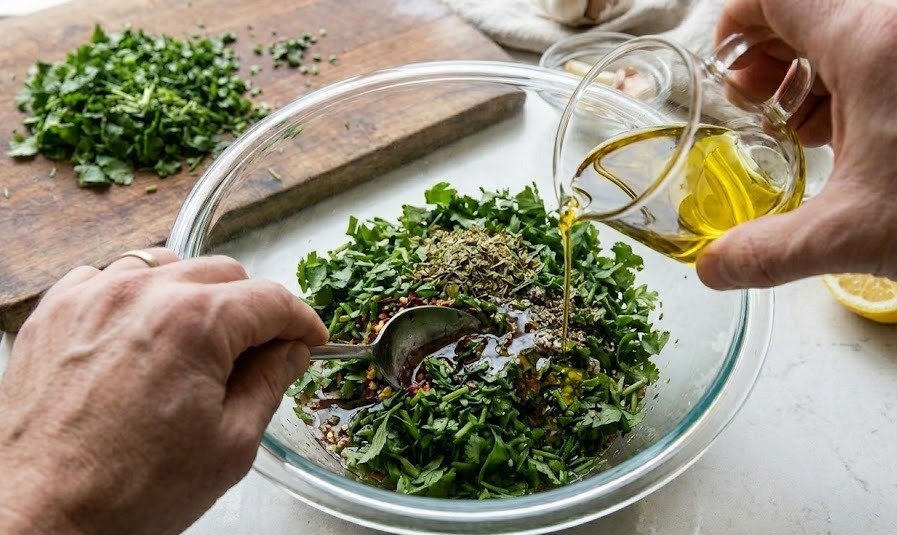
Slowly drizzle in the olive oil while stirring gently.
Step 5
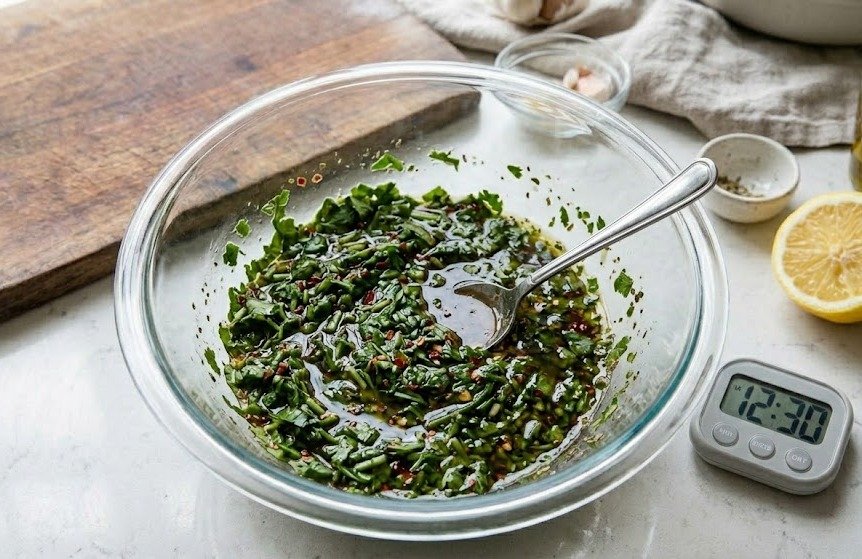
Mix well and let the sauce rest for 10–15 minutes before serving.
Recipe Card
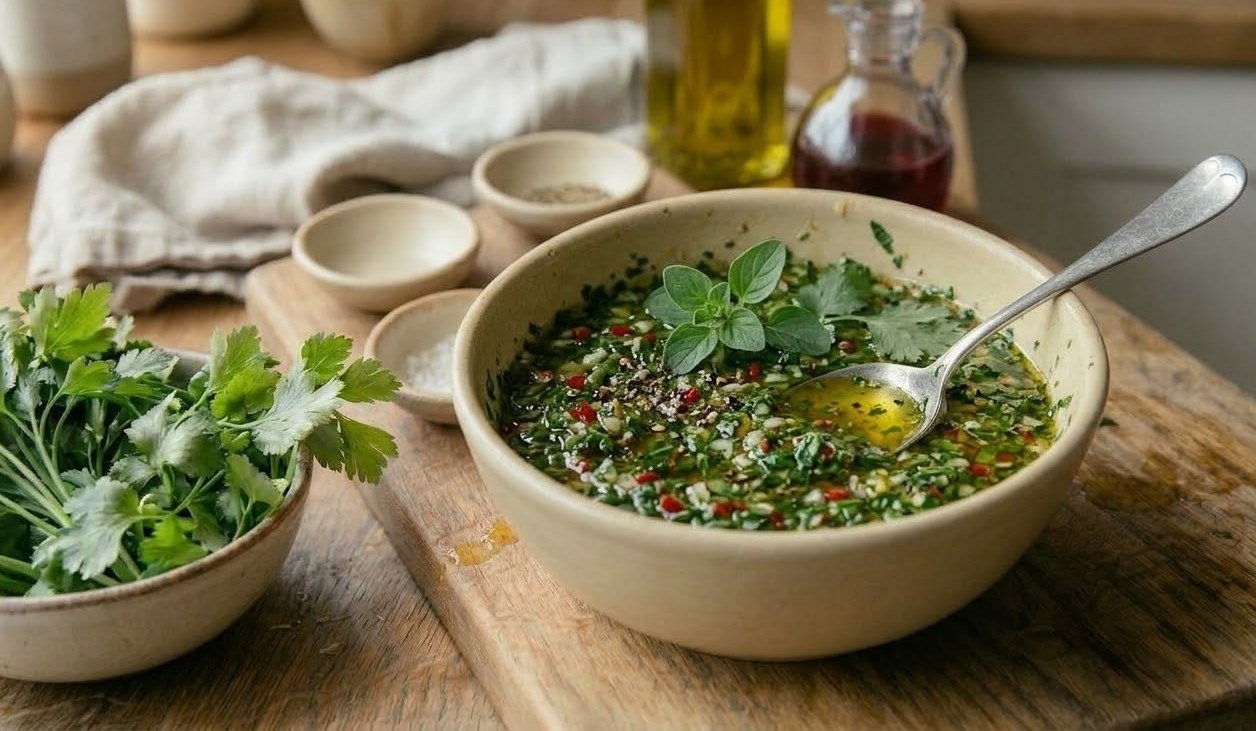
Best Chimichurri Recipe
Ingredients
Equipment
Method
- Finely chop the parsley and cilantro on a cutting board using a sharp knife.

- Mince the garlic cloves until very small and aromatic.

- Add the chopped herbs and garlic to a medium mixing bowl.

- Add dried oregano, crushed red pepper flakes, salt, and black pepper.

- Pour in the red wine vinegar and fresh lemon juice.

- Slowly drizzle in the olive oil while stirring everything together.

- Mix until the herbs and oil are evenly combined and the sauce looks vibrant and slightly loose.

- Let the chimichurri rest for about 10 minutes so the flavors blend together before serving.

Video
Notes
- I like chopping the herbs by hand instead of using a blender because it keeps the sauce fresh and slightly chunky.
- Taste the chimichurri before serving and adjust the salt, vinegar, or garlic if needed.
- Store leftovers in an airtight jar in the refrigerator for up to 5 days.
- If the olive oil solidifies in the fridge, just let the sauce sit at room temperature for a few minutes and stir before using.
Traditional Method for Making Chimichurri
Chimichurri is a fresh Argentine sauce made with parsley, garlic, vinegar, olive oil, and spices. It’s tangy, herby, and commonly served with grilled meats, adding bold flavor.#chimichurri #recipes #soup pic.twitter.com/LyoOKpXWaS
— Chimichurrirecipe (@Chimichurrire) March 22, 2026
Traditional chimichurri is often prepared entirely by hand rather than using a blender. Herbs are finely chopped with a knife and mixed in a bowl.
This method creates a rustic texture where small pieces of herbs remain visible in the sauce. Many people prefer this texture because it feels more authentic.
Allowing the sauce to rest at room temperature for a short time also helps develop deeper flavor.
Using a Food Processor vs Hand Chopping
Some people prefer using a food processor to save time. This method can quickly blend the ingredients into a uniform sauce.
However, it’s important not to over-process the mixture. Over-blending can create a paste instead of a loose sauce.
Hand chopping usually produces the best texture because it keeps the herbs vibrant and slightly chunky.
Chef’s Tips for the Best Chimichurri
Use fresh herbs whenever possible because they provide the brightest flavor. Taste the sauce after mixing and adjust the salt or acidity as needed.
Allow the sauce to rest before serving so the ingredients fully blend. Always use high-quality olive oil for the best results.
Expert Tips for Perfect Chimichurri
Start with small amounts of vinegar and add more if needed. It’s easier to increase acidity than to reduce it.
Make the sauce a few hours ahead of time if possible. This gives the herbs time to release their oils and flavor.
Store the sauce in a glass container so it stays fresh longer.
How to Balance Flavor in Chimichurri
Balancing flavor is important when making chimichurri.
Too much vinegar can make the sauce sharp, while too much oil can dull the herbs. Adjusting these ingredients gradually helps create the perfect balance.
Taste testing during preparation is the easiest way to achieve the right flavor.
How to Avoid Bitter Chimichurri
Sometimes parsley can taste slightly bitter. To avoid this, choose fresh herbs with bright green leaves.
Using fresh olive oil also helps prevent bitterness. Old or low-quality oil can negatively affect the flavor.
If bitterness appears, adding a small splash of lemon juice can help balance the sauce.
Chimichurri Recipe Variations
One of the best things about chimichurri is how customizable it is. Small ingredient changes can create different flavor profiles.
Different regions and cooks often create their own variations using additional herbs or spices.
Light Chimichurri Variation
A lighter version can be made by replacing part of the olive oil with water. This reduces the richness while keeping the flavor intact.
This version works especially well as a salad dressing or vegetable topping.
Avocado Chimichurri
Adding avocado creates a creamy twist on the traditional sauce. The avocado blends with olive oil and herbs to produce a smooth texture.
This variation pairs well with grilled chicken and seafood.
Mild Chimichurri Version
For a milder sauce, simply reduce or remove the red pepper flakes. This keeps the flavor fresh without adding heat.
Chimichurri verde vs Chimichurri rojo
Chimichurri verde is the classic green version made with parsley and herbs.
Chimichurri rojo includes red peppers, tomatoes, or paprika, which give the sauce a reddish color and slightly smoky flavor.
Both versions are delicious and work well with grilled foods.
Best Ways to Use Chimichurri Sauce
Chimichurri can be used in many ways in the kitchen.
It can be served as a marinade, a finishing sauce, or even a dipping sauce.
Its bright flavor complements both meats and vegetables.
What to Serve with Chimichurri
Chimichurri pairs beautifully with grilled foods. It’s often served with steak, chicken, seafood, roasted vegetables, or even bread.
The sauce adds freshness and flavor to almost any dish.
Chimichurri for Steak and Grilled Meats
Steak is the most classic pairing with chimichurri.
The herbaceous sauce cuts through the richness of grilled meat and adds freshness.
Many Argentine steak dishes are served with chimichurri on the side.
Chimichurri for Chicken, Fish, and Seafood
Chimichurri also works wonderfully with chicken and seafood.
Drizzling the sauce over grilled salmon or shrimp adds brightness and flavor.
It also pairs nicely with roasted chicken.
Chimichurri for Vegetables and Potatoes
Vegetables benefit greatly from the fresh flavor of chimichurri.
Roasted potatoes, grilled corn, and roasted carrots are especially delicious with a drizzle of the sauce.
Chimichurri as a Marinade
Chimichurri can also be used as a marinade before cooking.
Marinating meat in the sauce allows the herbs and garlic to infuse the food with flavor.
How to Store Chimichurri Sauce
Store chimichurri in an airtight container in the refrigerator.
Glass jars work best because they preserve flavor and freshness.
How Long Chimichurri Lasts in the Fridge
Properly stored chimichurri can last up to one week in the refrigerator.
The olive oil may solidify slightly when chilled, but it will return to normal at room temperature.
Can You Freeze Chimichurri?
Yes, chimichurri freezes very well.
Pour the sauce into ice cube trays and freeze. Once frozen, transfer the cubes into a freezer bag for easy portioning.
Chimichurri vs Pesto: What’s the Difference?
Although both sauces use herbs and olive oil, chimichurri and pesto are quite different.
Pesto typically includes basil, pine nuts, and cheese, while chimichurri uses parsley, garlic, vinegar, and spices.
Chimichurri is also thinner and more acidic than pesto.
Nutritional Benefits of Chimichurri
- Rich in antioxidants from fresh herbs
- Contains healthy fats from olive oil
- Low in carbohydrates
- Naturally dairy-free and gluten-free
- Provides vitamins A, C, and K
Is Chimichurri Healthy?
Chimichurri can be considered a healthy sauce when used in moderation.
Because it contains olive oil and fresh herbs, it provides beneficial nutrients without heavy ingredients.
It’s also free from added sugars and processed ingredients.
My Experience with Chimichurri
I started making chimichurri years ago when I wanted a simple sauce to serve with grilled steak. After the first time I made it, I realized how versatile it really is.
Now I keep a jar in my refrigerator almost every week. I use it on roasted vegetables, eggs, sandwiches, and grilled meats.
It’s one of those recipes that feels simple but makes food taste so much better.
Tips for Using Fresh vs Dried Herbs
Fresh herbs provide the brightest flavor and best texture for chimichurri.
Dried herbs can be used in small amounts, but they tend to produce a stronger and more concentrated taste.
If using dried herbs, reduce the quantity to avoid overpowering the sauce.
Best Chimichurri Recipes for Steak
Chimichurri is often served with grilled steak such as ribeye, flank steak, or skirt steak.
The sauce enhances the smoky flavor of grilled meat and adds freshness.
It’s a classic pairing that many barbecue lovers enjoy.
Chimichurri Sandwich and BBQ Ideas
Chimichurri can also be used in sandwiches and barbecue dishes.
It works beautifully on steak sandwiches, grilled chicken wraps, and burgers.
Adding a spoonful of chimichurri can instantly upgrade simple meals.
FAQs:-
What is chimichurri sauce made of?
Chimichurri is made with fresh parsley, garlic, olive oil, vinegar, oregano, and spices like red pepper flakes.
How long does chimichurri last in the fridge?
It usually lasts 5–7 days when stored in an airtight container in the refrigerator.
Can I use chimichurri as a marinade?
Yes, chimichurri works отлично as a marinade for steak, chicken, fish, and vegetables.
Is chimichurri spicy?
It’s mildly spicy due to red pepper flakes, but you can reduce or skip them to make it mild.
Can I freeze chimichurri sauce?
Yes, you can freeze it in ice cube trays for easy portion use later.
Conclusion
Chimichurri is one of the easiest sauces you can make, yet it delivers incredible flavor. With just a handful of fresh ingredients and a few minutes of preparation, you can create a vibrant sauce that enhances almost any dish.
I love keeping a jar ready in my fridge because it transforms simple meals into something exciting. Once you try making this best chimichurri recipe at home, you’ll probably find yourself using it again and again.
