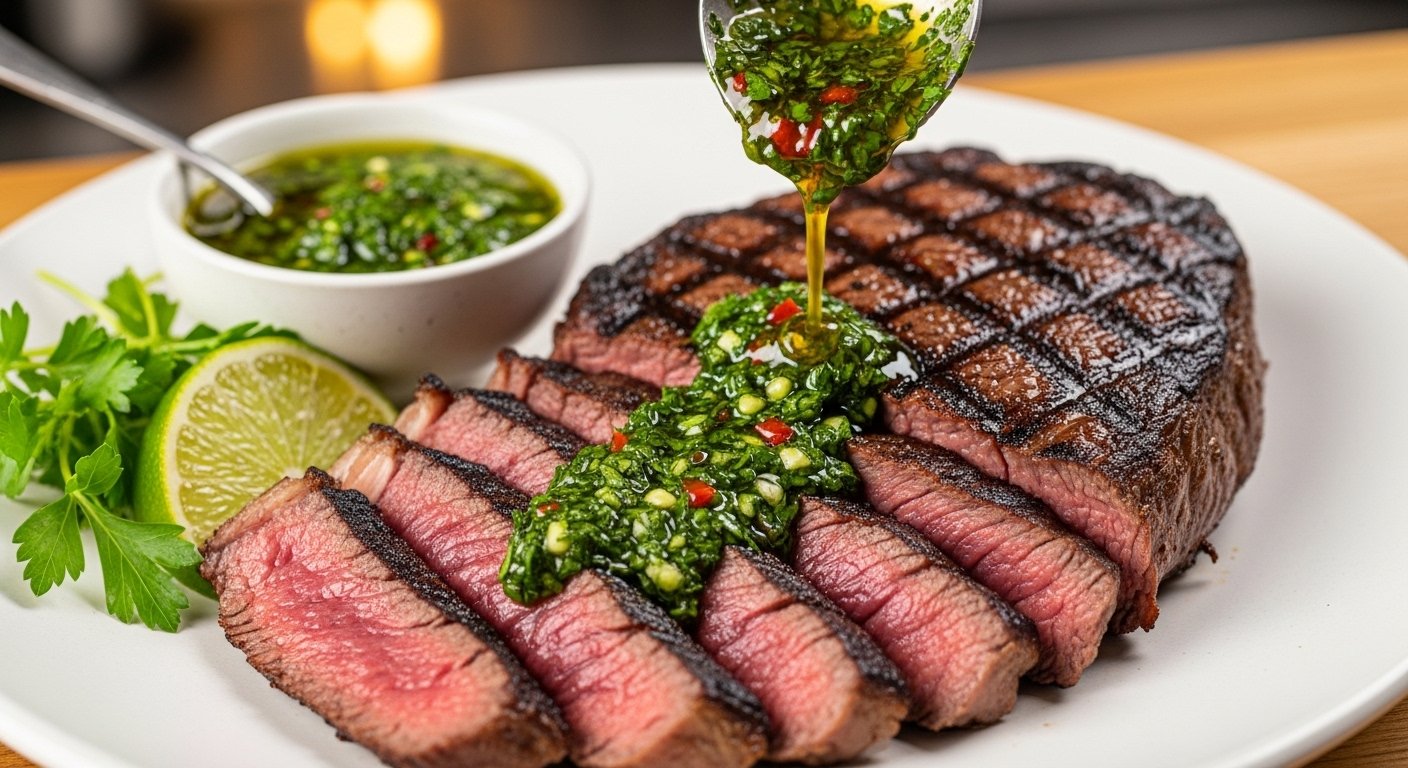
Bobby Flay brings a bold and flavorful twist to the traditional Argentine chimichurri by layering fresh herbs with smoky, tangy, and slightly spicy elements.
Chimichurri is known for its vibrant green color, fresh taste, and ability to elevate simple dishes into something memorable.
Recipe Overview
- Course: Sauce
- Cuisine: Argentinian
- Prep Time: 10 minutes
- Cook Time: 0 minutes
- Total Time: 10 minutes
- Servings: 8–10
- Calories: 100–130 kcal per serving
This version keeps the essence of the classic sauce but enhances it with depth and complexity, making it perfect for grilled meats, vegetables, and even sandwiches.
Unlike heavy sauces, chimichurri is light, herbaceous, and uncooked. It relies entirely on the quality of its ingredients and the balance between oil, acid, and aromatics.
Bobby Flay’s approach focuses on building flavor through contrast—fresh parsley and oregano paired with garlic, vinegar, and a hint of heat create a sauce that is both refreshing and bold.
Why I Love This Recipe
I love Bobby Flay’s Chimichurri Recipe because it is simple, fresh, and full of bold flavor. It comes together in just a few minutes without any cooking, yet it completely transforms any dish it is added to.
What makes Bobby Flay’s Chimichurri Recipe stand out is the smoky twist.
The addition of smoked paprika or chipotle adds depth and a slightly rich flavor that you don’t usually get in traditional chimichurri. It brings a perfect balance between freshness and smokiness.
Another reason I enjoy this recipe is its texture. It’s not blended into a smooth paste but kept slightly chunky, which makes every bite more flavorful and authentic.
You can actually taste each ingredient instead of everything being mixed into one.
I also love how versatile Bobby Flay’s Chimichurri Recipe is. You can use it on grilled meat, roasted vegetables, sandwiches, or even as a dip. It instantly adds brightness and freshness to any meal.
Overall, it’s quick, easy, and always delivers amazing flavor, which is why it’s one of my favorite go-to sauces.
Ingredients
| Ingredient | Quantity | Notes |
|---|---|---|
| Fresh flat-leaf parsley | 1 cup (chopped) | Main herb base |
| Fresh oregano | 2 tbsp | Can substitute with 1 tbsp dried |
| Garlic cloves | 3–4 cloves | Finely minced |
| Olive oil | 1/2 cup | Use good quality |
| Red wine vinegar | 1/4 cup | Adds acidity |
| Smoked paprika | 1 tsp | Signature smoky flavor |
| Red pepper flakes | 1/2–1 tsp | Adjust to taste |
| Salt | To taste | Enhances flavor |
| Black pepper | To taste | Adds mild heat |
Ingredients and Substitutions
Flexibility is one of the strengths of chimichurri. While fresh ingredients are always preferred, substitutions can still produce excellent results.
Fresh oregano can be replaced with dried oregano, but the quantity should be reduced since dried herbs are more concentrated.
If smoked paprika is unavailable, regular paprika or red pepper flakes can be used, though the smoky depth will be slightly reduced.
Garlic can be fresh, frozen, or even pre-minced, but fresh garlic delivers the strongest flavor.
Olive oil is essential for richness, but neutral oils like canola can be used if needed. Red wine vinegar provides tang, though apple cider vinegar offers a slightly sweeter and fruitier profile.
Equipment
| Equipment | Purpose |
|---|---|
| Knife | For chopping herbs and garlic |
| Cutting board | Safe preparation surface |
| Mixing bowl | For combining ingredients |
| Spoon or whisk | Mixing the sauce |
| Food processor (optional) | Quick chopping (pulse only) |
| Measuring cups and spoons | Accurate quantities |
How to Make Bobby Flay’s Chimichurri
Step 1: Prepare the Herbs
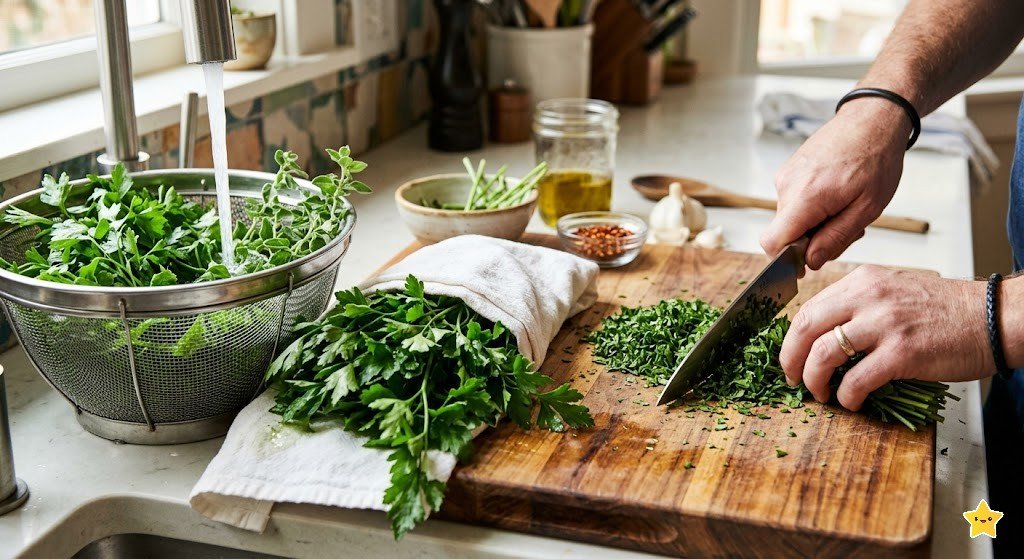
Start by rinsing the parsley and oregano thoroughly under cold water. Pat them dry using a clean towel. Remove thick stems and finely chop the leaves. The goal is a consistent texture without turning the herbs into a paste.
Step 2: Mince the Garlic
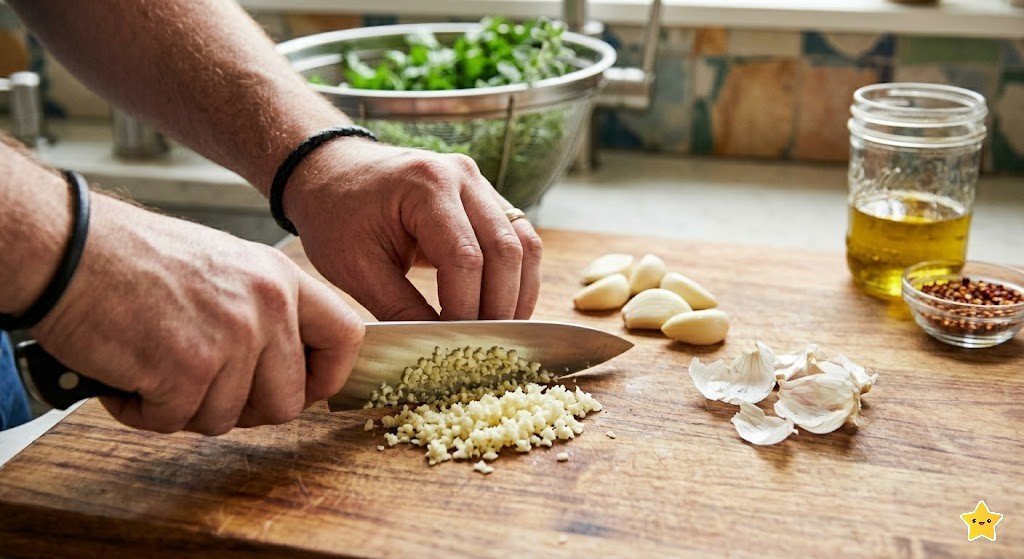
Peel the garlic cloves and mince them as finely as possible. This ensures even distribution of flavor throughout the sauce and prevents large, overpowering bites.
Step 3: Combine the Base Ingredients
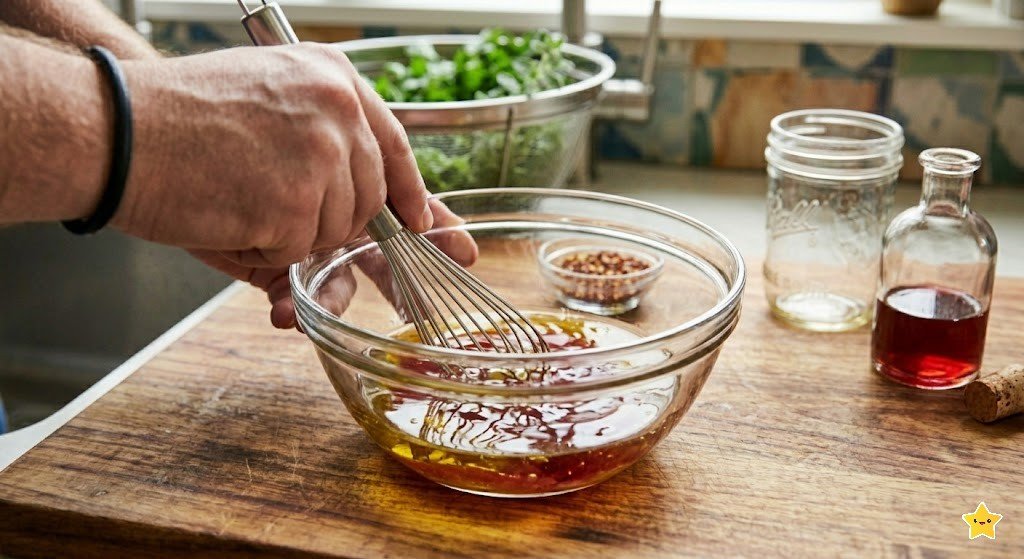
In a medium bowl, add olive oil and red wine vinegar. Stir lightly to combine. The mixture will not fully emulsify, which is normal.
Step 4: Add Seasonings
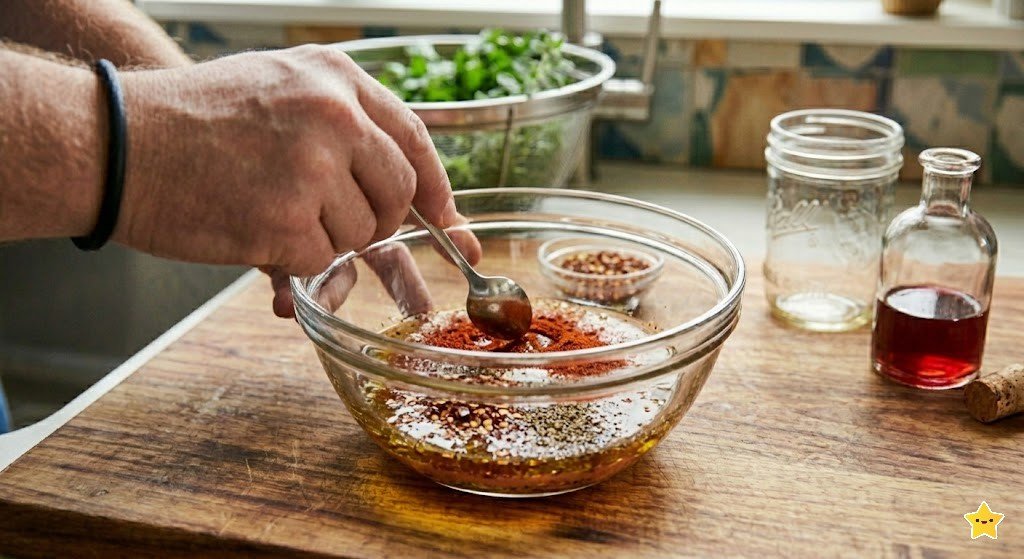
Add smoked paprika, red pepper flakes, salt, and black pepper to the oil and vinegar mixture. Stir to distribute the spices evenly.
Step 5: Mix in Herbs and Garlic
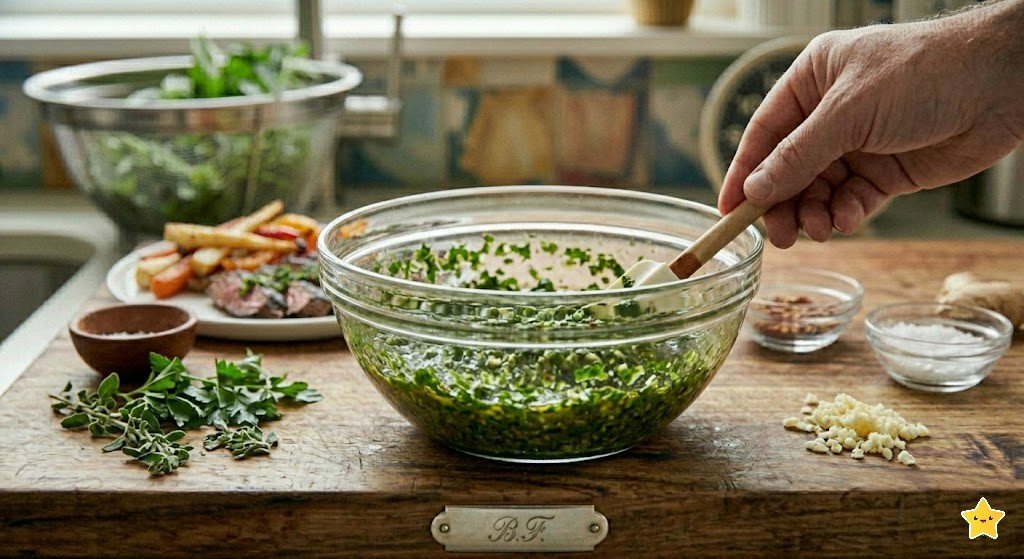
Add the chopped parsley, oregano, and minced garlic to the bowl. Stir everything together until well combined. The mixture should look loose and slightly chunky.
Step 6: Adjust the Flavor
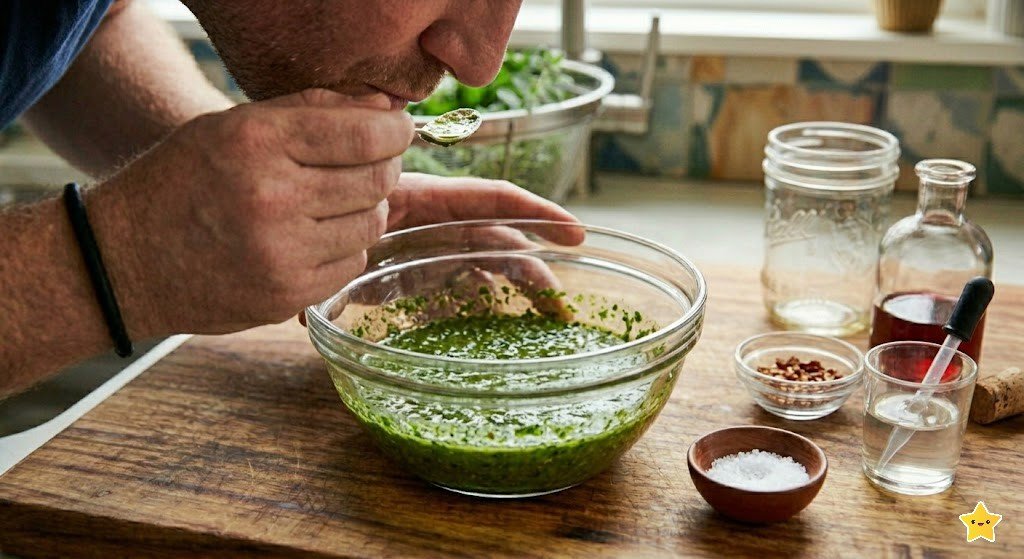
Taste the chimichurri and adjust the seasoning as needed. Add more salt for depth, vinegar for tang, or chili for heat.
Step 7: Let it Rest
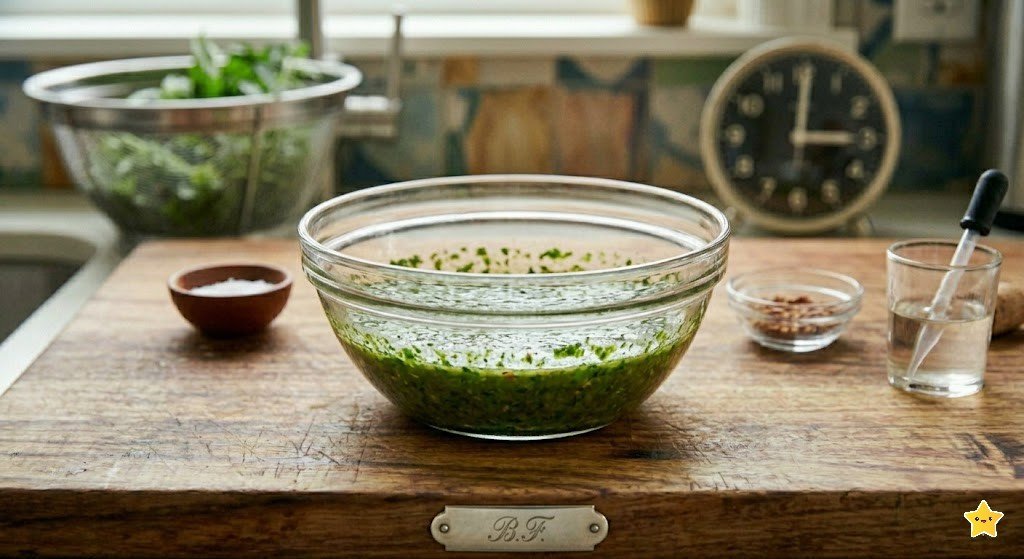
Allow the chimichurri to sit at room temperature for at least 15–30 minutes. This resting time helps the flavors meld together and develop complexity.
Step 8: Serve
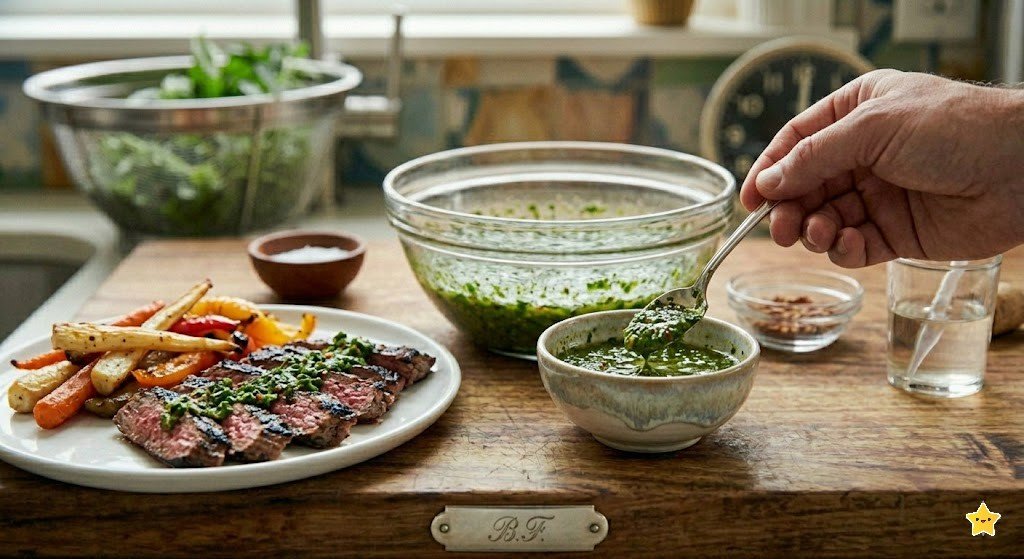
Stir the sauce again before serving. Spoon it over grilled meats, roasted vegetables, or use it as a dipping sauce.
Green Chimichurri
Green chimichurri is the classic version made primarily with parsley, oregano, garlic, oil, and vinegar. It has a fresh, herbal flavor and a bright green color. This version is widely used as a finishing sauce for grilled meats.
Smokey Red Chimichurri
Smokey red chimichurri introduces ingredients like smoked paprika or chipotle, giving the sauce a deeper, richer flavor and a slightly reddish hue. This variation pairs exceptionally well with grilled steak and adds a bold, smoky dimension.
Top Tips
- Always use fresh herbs for the best flavor
- Do not over-process the mixture
- Let the sauce rest before serving
- Taste and adjust seasoning gradually
- Use high-quality olive oil
Common Mistakes to Avoid
Over-blending is one of the most common mistakes. Chimichurri should not resemble a paste. Another issue is using old or wilted herbs, which can make the sauce taste dull.
Too much garlic can overpower the dish, while too little can make it bland. Balance is essential. Also, avoid cooking chimichurri—it should always be used fresh to maintain its vibrant flavor.
How Bobby Flay Uses Chimichurri
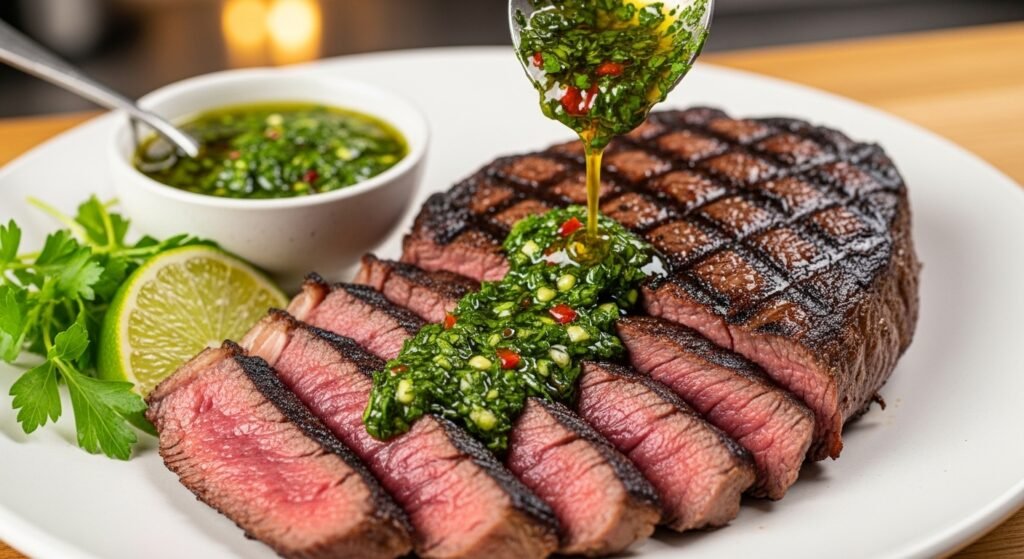
Bobby Flay primarily uses chimichurri as a finishing sauce. He spoons it over grilled steak, chicken, or fish just before serving. This preserves the freshness and prevents the herbs from losing their brightness.
He also uses it to enhance vegetables, sandwiches, and grain bowls. The sauce acts as a flavor booster, adding acidity and herbaceous notes to balance richer foods.
Serving Suggestions
Chimichurri pairs beautifully with grilled meats such as steak, lamb, and chicken. It also complements seafood like salmon and shrimp.
For vegetarian options, drizzle it over roasted vegetables, potatoes, or grain bowls. It can also be used as a spread for sandwiches or a dipping sauce for bread.
Storage and Reheating
Store chimichurri in an airtight container in the refrigerator. It typically lasts up to 5 days. The oil may solidify slightly when chilled, so allow the sauce to sit at room temperature before using.
Freezing is also an option for longer storage. Freeze in small portions and thaw as needed.
How to Store Chimichurri
Keep the sauce in a sealed container to prevent air exposure. Refrigeration helps maintain freshness and slows spoilage.
Glass containers are ideal because they do not react with the acidic ingredients. Always stir the sauce before serving after storage.
Bring to Room Temperature Before Using
Before serving, let the chimichurri sit at room temperature for about 15–20 minutes. This allows the olive oil to return to its liquid state and restores the sauce’s texture and flavor.
Nutrition
- Calories: ~100–130 per serving
- Fat: 11–14g
- Saturated Fat: 2g
- Carbohydrates: 1–2g
- Fiber: 0.5–1g
- Protein: ~0.3–0.5g
- Sodium: 8–150mg
- Potassium: ~50mg
Bobby Flay’s Chimichurri Recipe
Ingredients
Equipment
Method
- Wash and dry the parsley and oregano, then finely chop them.

- Peel and finely mince the garlic cloves.
- In a mixing bowl, add olive oil and red wine vinegar.

- Add smoked paprika, red pepper flakes, salt, and black pepper.

- Stir in the chopped herbs and minced garlic until well combined.
- Taste the chimichurri and adjust seasoning as needed.
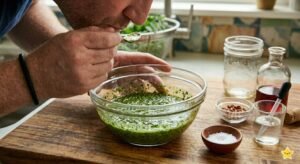
- Let it rest for 15 minutes, then stir and serve fresh.

Notes
- Use fresh herbs for the best flavor and color.
- Do not over-blend; keep the texture slightly chunky.
- Letting the sauce rest improves taste significantly.
- Store in the fridge for up to 5 days and bring to room temperature before serving.
YouTube Videos
FAQs:-
What makes Bobby Flay’s chimichurri different?
He adds smoked paprika or chipotle, giving the sauce a smoky and deeper flavor compared to the traditional version.
Can chimichurri be made ahead of time?
Yes, it tastes better when made a few hours in advance because the flavors blend.
How long does chimichurri last in the fridge?
It can be stored in the refrigerator for about 4–5 days in an airtight container.
Can I use dried herbs instead of fresh?
Fresh herbs are best, but dried oregano can be used in smaller amounts if needed.
Is chimichurri used as a marinade or sauce?
It is mostly used as a finishing sauce, added after cooking for the best flavor.
Conclusion:-
Bobby Flay’s chimichurri stand s out because of its balance between tradition and innovation. The addition of smoky elements like paprika gives the sauce a deeper flavor without overpowering its freshness.
It is simple to prepare yet incredibly versatile. Whether paired with grilled meats or used to enhance vegetables, it consistently delivers bold, vibrant flavor. This recipe proves that even the simplest ingredients, when combined thoughtfully, can create something truly exceptional.
