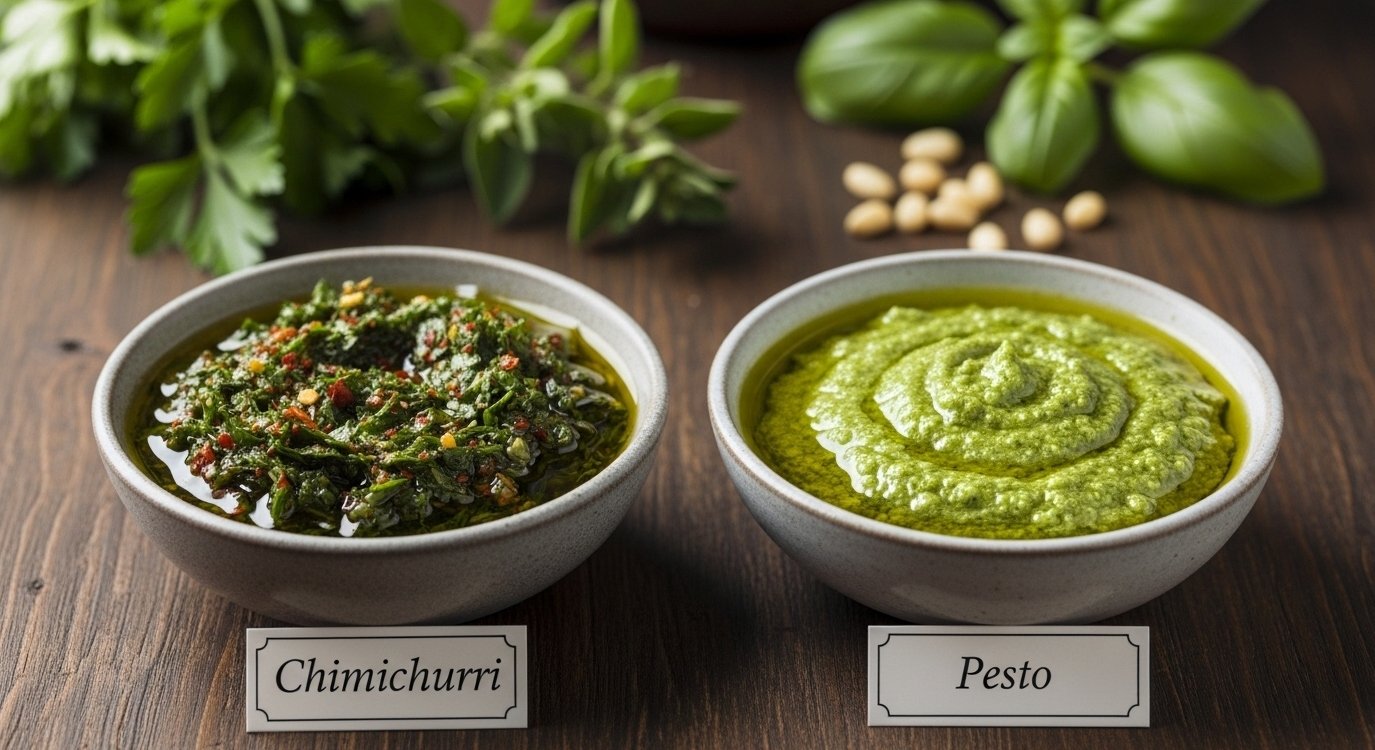
Green sauces are a simple yet powerful way to elevate everyday meals. Among the most popular are chimichurri and pesto—two vibrant, herb-based sauces that may look similar at first glance but differ significantly in taste, texture, and usage.
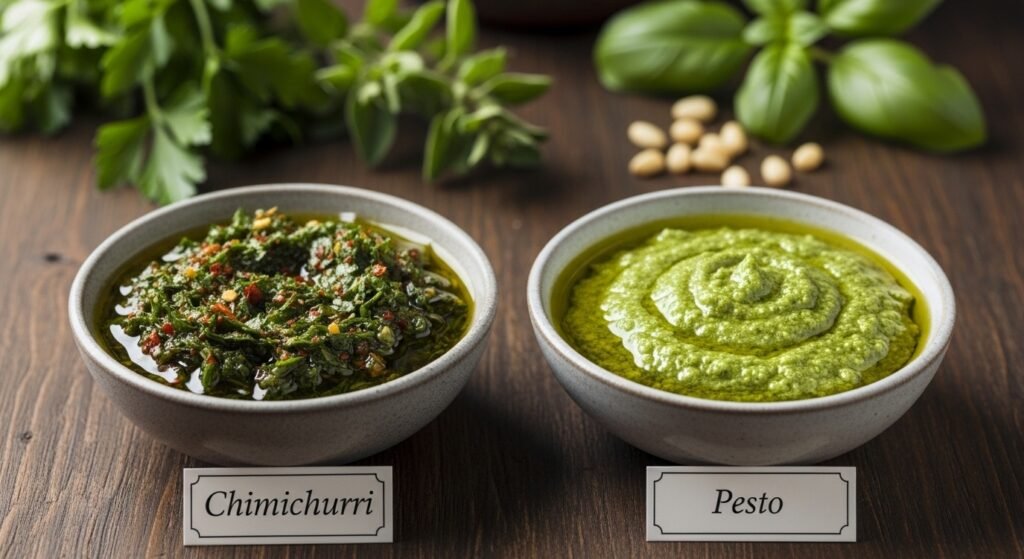
Understanding these differences helps you choose the right sauce for the right dish and bring out the best flavors in your cooking.
Chimichurri vs Pesto: Quick Summary
- Origin: Argentina vs Italy
- Main herb: Parsley vs Basil
- Texture: Chunky vs Smooth
- Flavor: Tangy vs Rich
- Best use: Meat vs Pasta
What is Chimichurri?
Chimichurri is a bold and fresh sauce that comes from Argentina and Uruguay. It is deeply connected to grilled meat culture and is often served as a finishing sauce or marinade for steak and other proteins.
The flavor of chimichurri is sharp, tangy, and slightly spicy. This comes mainly from the use of vinegar and chili flakes, which balance the richness of oil and herbs.
Unlike smooth sauces, chimichurri is usually chunky and rustic, giving it a more homemade feel.
Ingredients in Chimichurri
| Ingredient | Role in Sauce |
|---|---|
| Parsley | Main herb base |
| Oregano | Adds depth |
| Garlic | Strong flavor |
| Olive oil | Provides richness |
| Vinegar | Adds tanginess |
| Chili flakes | Brings mild heat |
| Salt & pepper | Enhances taste |
What is Pesto?
Pesto is a classic Italian sauce originating from Genoa. It is widely known for its rich, creamy texture and nutty, cheesy flavor.
Traditionally, pesto is blended into a smooth paste, making it perfect for coating pasta or spreading on bread.
The taste of pesto is milder compared to chimichurri but more indulgent due to the presence of cheese and nuts. It delivers a balanced combination of herbal freshness and creamy richness.
Ingredients in Pesto
| Ingredient | Role in Sauce |
|---|---|
| Basil | Main herb |
| Pine nuts | Nutty flavor |
| Parmesan cheese | Adds richness and umami |
| Garlic | Flavor base |
| Olive oil | Smooth texture |
| Salt | Enhances taste |
Key Differences Between Chimichurri and Pesto
Even though both sauces are green and herb-based, their differences become clear when you look deeper.
The most obvious difference lies in the herbs used. Pesto relies on basil, which gives it a sweet and aromatic flavor.
Chimichurri, on the other hand, uses parsley and often oregano, resulting in a fresher and slightly sharper taste.
Another major distinction is the liquid base. Pesto uses only olive oil, which makes it rich and smooth. Chimichurri includes vinegar, giving it a tangy and acidic kick that cuts through fatty foods.
Texture also sets them apart. Pesto is blended into a creamy consistency, while chimichurri remains chunky and loose, with visible bits of herbs and garlic.
Similarities Between
Despite their differences, these sauces share a few common traits. Both are herb-based and use garlic and olive oil as foundational ingredients.
They are also versatile and can be used as dips, spreads, or marinades. Most importantly, both sauces are easy to prepare and require minimal cooking.
Texture & Preparation
The preparation method plays a big role in defining the final texture of each sauce. Pesto is usually made using a food processor or blender, which creates a smooth and creamy paste.
Chimichurri, however, is traditionally hand-chopped, resulting in a coarser and more textured sauce.
Equipment Needed
| Equipment | Purpose |
|---|---|
| Knife | Chopping herbs |
| Cutting board | Prep surface |
| Food processor | Blending pesto |
| Mixing bowl | Combining ingredients |
| Spoon/whisk | Mixing chimichurri |
| Mortar & pestle | Traditional pesto preparation |
Step-by-Step Preparation
How to Make Chimichurri
To prepare chimichurri, start by finely chopping parsley, oregano, and garlic. Transfer them into a bowl and mix in vinegar, salt, pepper, and chili flakes.
Slowly add olive oil while stirring, allowing the ingredients to combine without becoming too smooth. Let the mixture rest for about 20–30 minutes so the flavors can develop.
How to Make Pesto
For pesto, add basil, garlic, and pine nuts into a food processor and pulse until roughly combined.
Then add grated parmesan cheese and slowly drizzle in olive oil while blending. Continue blending until the sauce becomes smooth and creamy.
Taste & Flavor Comparison
Chimichurri delivers a bright, tangy, and slightly spicy flavor that pairs exceptionally well with grilled meats. Its acidity helps balance rich and fatty dishes.
Pesto, in contrast, offers a creamy and nutty flavor with a hint of cheese. It is more comforting and works best with pasta, bread, and mild proteins.
Usage & Pairing
Both sauces are highly versatile, but they shine in different contexts.
Chimichurri is best suited for grilled meats, seafood, and roasted vegetables. It works well as a marinade or finishing sauce that adds freshness and acidity.
Pesto is commonly used with pasta, pizza, sandwiches, and salads. Its creamy texture makes it ideal as a base sauce or spread.
Variations
Both sauces are flexible and can be adapted based on available ingredients.
Chimichurri can include herbs like cilantro or mint, and some versions replace vinegar with lemon juice. Additional ingredients like onions or shallots can also be added for complexity.
Pesto can be made with different greens such as spinach or kale, and nuts like walnuts or almonds can replace pine nuts. Dairy-free versions are also popular.
Nutrition Overview
Both sauces offer nutritional benefits due to their use of fresh herbs and olive oil.
- Rich in healthy fats from olive oil
- Contains antioxidants from herbs
- Provides vitamins like A, C, and K
However, pesto tends to be higher in calories because of cheese and nuts, while chimichurri is lighter and more acidic.
Storage & Shelf Life
Chimichurri can be stored in the refrigerator for up to a week and is best enjoyed fresh.
Pesto typically lasts 3–5 days in the fridge but can be frozen for longer storage. Adding a thin layer of oil on top of pesto helps preserve its color and freshness.
Related Comparisons
Other green sauces like gremolata and salsa verde are often compared with chimichurri and pesto.
Gremolata is simpler and does not include oil, while salsa verde tends to be lighter and sometimes briny. Each sauce has its own unique character and culinary use.
Which One Should You Choose?
Choosing between chimichurri and pesto depends on your dish. If you’re preparing grilled meat or something rich, chimichurri’s acidity will enhance the flavor.
If you’re making pasta or need a creamy spread, pesto is the better option.
Chimichurri vs Pesto: What’s the Real Difference?
— Chimichurrirecipe (@Chimichurrire) March 29, 2026
My Point" Chimichurri and pesto are both green sauces, but they differ greatly in taste, texture, and how they are used.
Also Read: https://t.co/uBBB3iSn9a pic.twitter.com/oJ9djzYMVE
FaQs:-
What is the main difference between chimichurri and pesto?
The main difference is that chimichurri uses parsley and vinegar, making it tangy, while pesto uses basil, cheese, and nuts, making it rich and creamy.
Can I use chimichurri instead of pesto?
Yes, but the flavor will be different. Chimichurri is more acidic and works better with meats, while pesto is better for pasta and bread.
Which is healthier: chimichurri or pesto?
Chimichurri is generally lighter and lower in calories, while pesto is higher in fat due to cheese and nuts.
What dishes go best with chimichurri?
Chimichurri pairs best with grilled meats, chicken, seafood, and roasted vegetables.
Why does pesto taste different from chimichurri?
Pesto tastes creamy and nutty because of cheese and nuts, while chimichurri tastes fresh and tangy due to vinegar and herbs.
Conclusion:-
Chimichurri and pesto are both excellent additions to any kitchen. While they share a similar green appearance and basic structure, their differences in ingredients, flavor, and preparation make them unique.
Keeping both sauces in your repertoire allows you to experiment with a wide range of dishes and bring fresh, exciting flavors to your meals.
