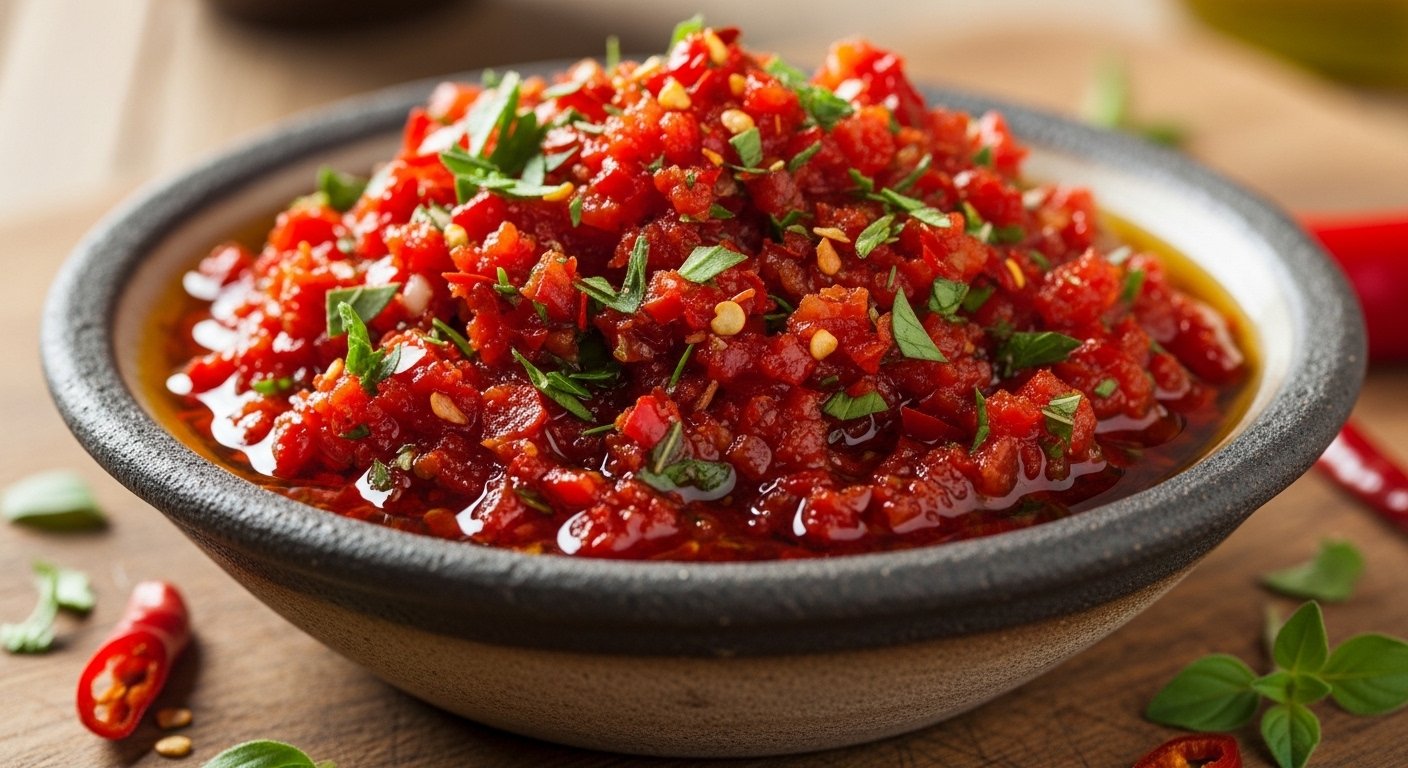
Red chimichurri, or chimichurri rojo, is a vibrant, smoky, and herb-forward sauce that has become a favorite in kitchens around the world.
Originating from Argentina, this bold condiment is a variation of the classic green chimichurri, enhanced with roasted red peppers and smoked paprika.
The result is a rich, slightly sweet, tangy, and mildly spicy sauce that can elevate almost any dish.
Unlike many complex sauces, red chimichurri is simple to prepare and relies on fresh ingredients rather than cooking techniques.
It is a raw, oil-based sauce that delivers maximum flavor with minimal effort. Whether you are cooking for a casual meal or a special gathering, this sauce adds depth, color, and character to your food.
What is Red Chimichurri?
Red chimichurri is a traditional Argentine condiment made from a combination of fresh herbs, garlic, vinegar, olive oil, and spices, with the addition of roasted red peppers.
These peppers not only give the sauce its signature red color but also contribute a smoky and slightly sweet flavor.
The sauce is typically served alongside grilled meats, but its versatility extends far beyond that. It can be used as a marinade, dressing, dipping sauce, or finishing touch.
Its bold flavor profile makes it a perfect complement to both simple and elaborate dishes.
Red Chimichurri vs Green Chimichurri
Although both red and green chimichurri share a common base, they differ in several key ways:
- Color and Ingredients: Green chimichurri relies heavily on fresh herbs like parsley and cilantro, while red chimichurri includes roasted red peppers and paprika.
- Flavor Profile: Green chimichurri is sharper and more herbaceous, whereas red chimichurri is smoky, slightly sweet, and deeper in flavor.
- Texture: Both sauces are slightly chunky, but red chimichurri tends to be smoother due to the presence of roasted peppers.
- Usage: While both are versatile, red chimichurri pairs especially well with grilled and roasted foods because of its smoky characteristics.
Why You’ll Love This Recipe
This red chimichurri recipe is highly appealing for many reasons:
- It is quick and easy to prepare, requiring minimal time and effort.
- Uses fresh, wholesome ingredients that are easy to find.
- Delivers a bold combination of smoky, tangy, and herbaceous flavors.
- Can be customized to suit personal taste preferences.
- Works well as a sauce, marinade, dressing, or dip.
- Stores well and can be made ahead of time.
- Enhances a wide variety of dishes, from meats to vegetables and grains.
Ingredients
Here is a detailed table of ingredients needed for this recipe:
| Ingredient | Quantity | Notes |
|---|---|---|
| Roasted red bell pepper | 1 large | Freshly roasted or jarred |
| Fresh parsley | 1 cup | Finely chopped |
| Fresh cilantro | ½ cup | Optional but recommended |
| Garlic cloves | 2–3 | Minced |
| Red wine vinegar | 2–3 tbsp | Adds acidity |
| Olive oil | ½ cup | Use high-quality oil |
| Smoked paprika | 1 tsp | Key for smoky flavor |
| Ground cumin | ½ tsp | Optional depth |
| Red pepper flakes | ¼–½ tsp | Adjust heat level |
| Salt | To taste | Enhances flavor |
| Black pepper | To taste | Adds mild spice |
Equipment
Below is the equipment required:
| Equipment | Purpose |
|---|---|
| Cutting board | For chopping ingredients |
| Sharp knife | For precise cutting |
| Food processor (optional) | For quick mixing |
| Mixing bowl | To combine ingredients |
| Spoon or spatula | For mixing |
| Airtight container | For storage |
How to Make Red Chimichurri
Step 1: Roast the Red Pepper
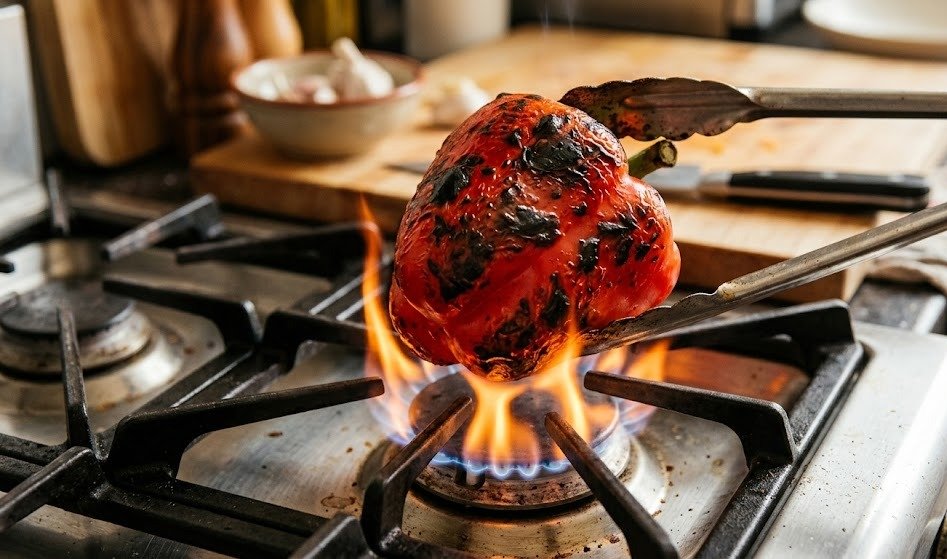
If using a fresh red bell pepper, roast it until the skin is charred and blistered. This can be done in an oven or over a flame.
Once roasted, let it cool, peel off the skin, remove seeds, and chop finely. If using jarred peppers, simply drain and pat dry.
Step 2: Chop the Ingredients
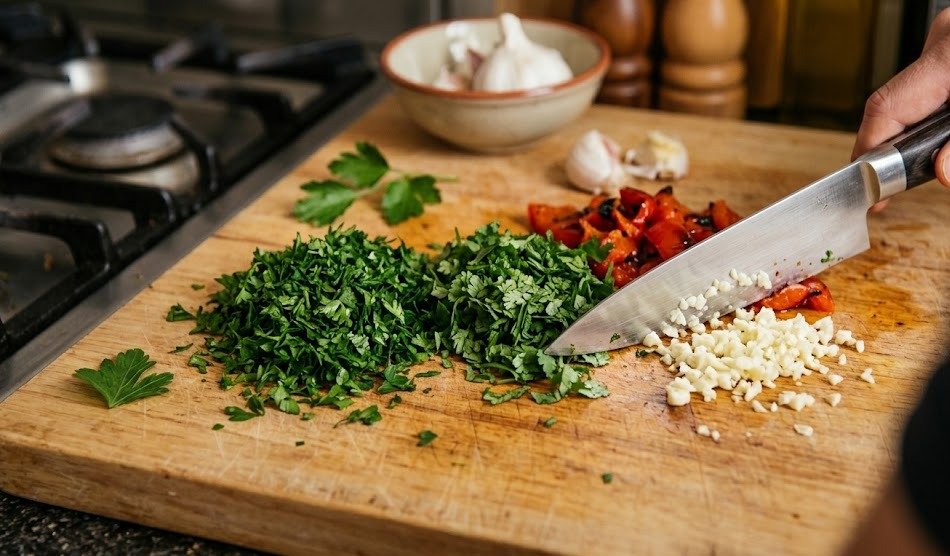
Finely chop parsley, cilantro, and garlic. You can use a knife for better control over texture or a food processor for convenience. Avoid over-processing, as the sauce should remain slightly chunky.
Step 3: Combine Base Ingredients
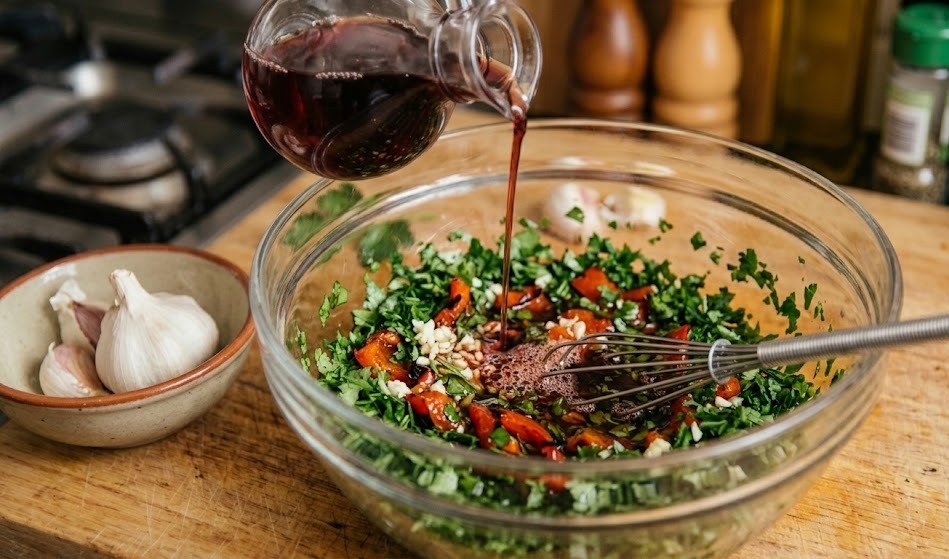
In a bowl, mix the chopped herbs, garlic, and roasted red pepper. Add red wine vinegar and allow the mixture to sit for 5–10 minutes. This step helps mellow the garlic and blend the flavors.
Step 4: Add Spices
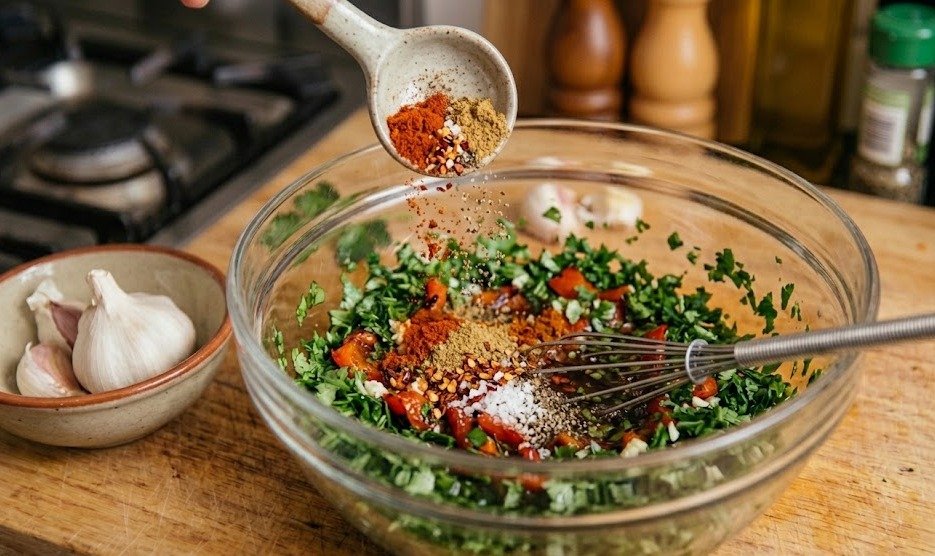
Add smoked paprika, cumin, red pepper flakes, salt, and black pepper. Stir thoroughly to distribute the spices evenly.
Step 5: Add Olive Oil
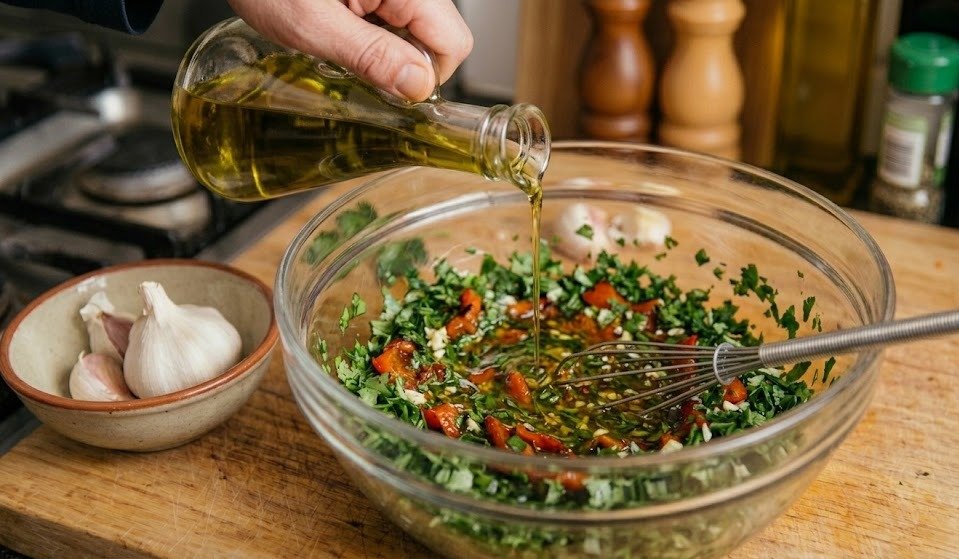
Slowly pour in olive oil while stirring continuously. This creates a cohesive and well-balanced sauce.
Step 6: Taste and Adjust
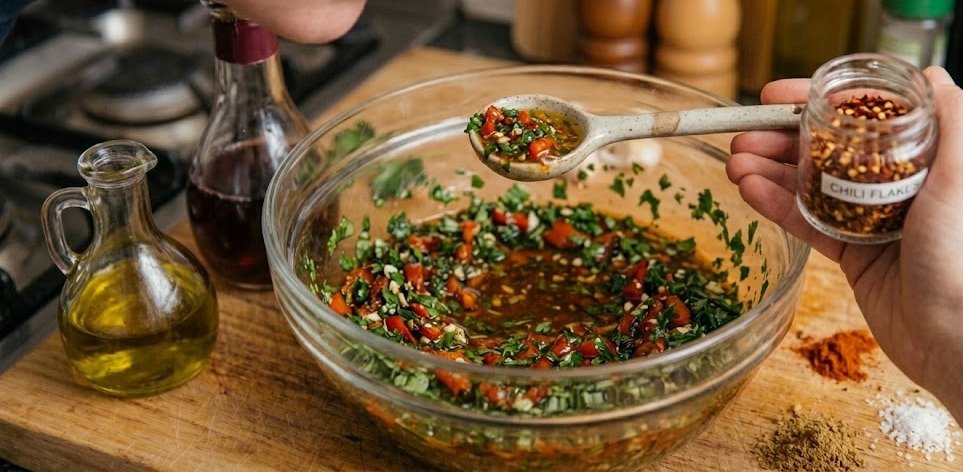
Taste the chimichurri and adjust the seasoning as needed. Add more vinegar for brightness, oil for richness, or chili flakes for extra heat.
Step 7: Rest the Sauce
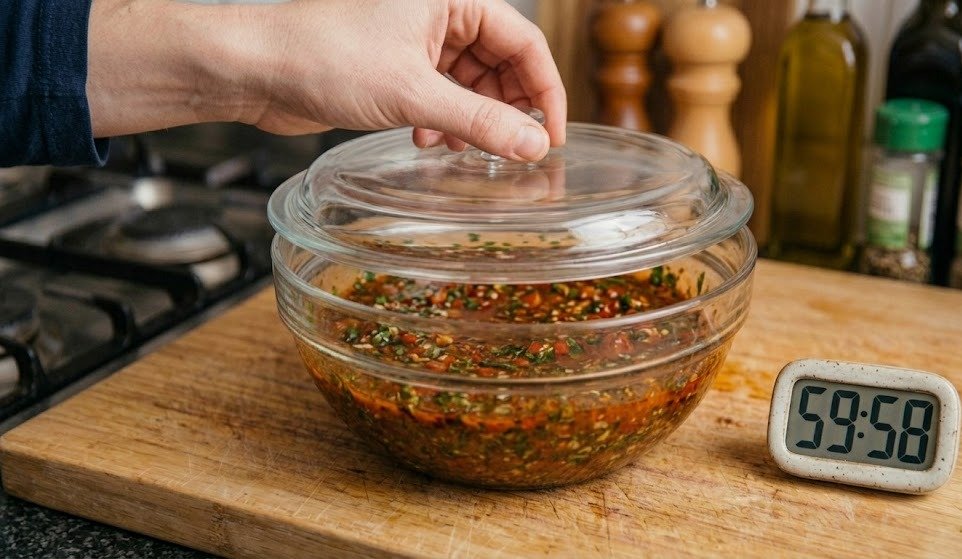
Let the sauce rest for at least 15 minutes before serving. For the best flavor, allow it to sit for an hour so the ingredients can fully meld together.
Tips for Best Results
- Use fresh herbs for optimal flavor and aroma.
- Keep the texture slightly chunky; avoid making it too smooth.
- Balance acidity and oil carefully for the best taste.
- Roast peppers properly to enhance smokiness.
- Allow resting time for flavors to develop.
- Taste and adjust before serving.
How to Use Red Chimichurri
Red chimichurri is incredibly versatile and can be used in many ways:
- Drizzle over grilled meats such as steak, chicken, or lamb.
- Use as a marinade for proteins and vegetables.
- Add to roasted vegetables for enhanced flavor.
- Spread on sandwiches, wraps, or burgers.
- Mix into grain bowls like rice or quinoa.
- Serve as a dipping sauce for bread or snacks.
- Toss with pasta for a quick and flavorful dish.
Variations to the Recipe
This recipe can be easily customized:
- Spicy Version: Add more chili flakes or fresh hot peppers.
- Tangy Variation: Include lemon or lime juice.
- Milder Flavor: Reduce garlic and spice levels.
- Herb Variation: Use only parsley or experiment with mint.
- Oil Variation: Substitute olive oil with avocado oil.
Storage and Make-Ahead Tips
- Store in an airtight container in the refrigerator.
- Keeps fresh for up to one week.
- Bring to room temperature before serving.
- Stir well before use as oil may separate.
- Freeze in small portions for up to 3 months.
Nutritional Information
Approximate values per serving:
- Calories: 120–200 kcal
- Fat: 12–20 g
- Saturated Fat: 2–3 g
- Carbohydrates: 1–3 g
- Fiber: 0.5–1 g
- Protein: 0.5–1 g
- Sodium: 50–150 mg
- Vitamin A: Moderate
- Vitamin C: Moderate
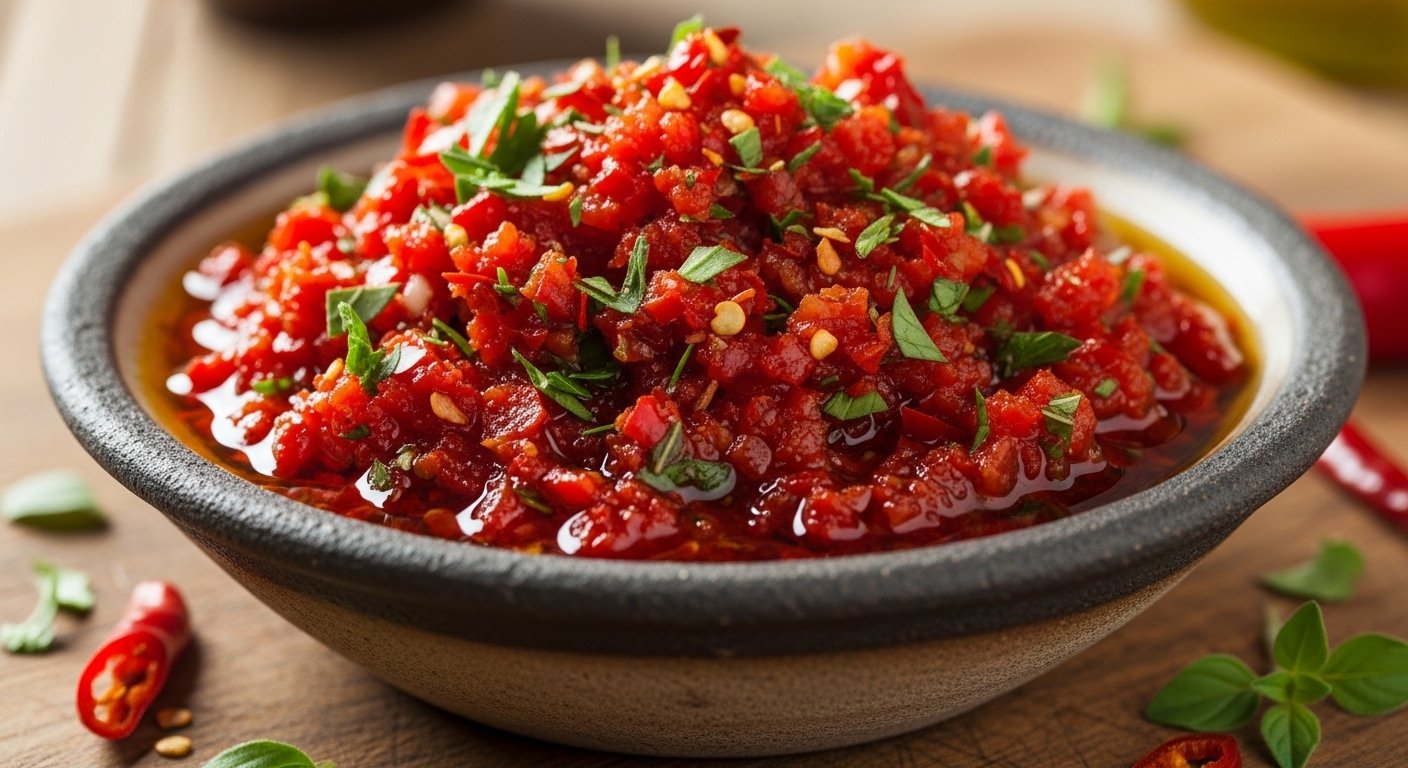
Red Chimichurri Recipe
Ingredients
Equipment
Method
- Do not over-blend; chimichurri should be slightly chunky.

- Use fresh herbs for the best flavor.

- Let the sauce rest to improve taste.

- Store in the fridge for up to 1 week and stir before use.

- Freeze in small portions for up to 3 months.

Video
Notes
- Do not over-blend; chimichurri should be slightly chunky.
- Fresh herbs are essential for best flavor.
- Letting the sauce rest improves taste significantly.
- Store in the fridge for up to 1 week and stir before use.
- Can be frozen in small portions for up to 3 months.
FAQs:-
What is red chimichurri made of?
Red chimichurri is made with roasted red peppers, fresh herbs (parsley and sometimes cilantro), garlic, olive oil, red wine vinegar, and spices like smoked paprika.
How is red chimichurri different from green chimichurri?
Red chimichurri includes roasted red peppers and smoked paprika, giving it a smoky and slightly sweet flavor, while green chimichurri is more herb-based and sharper.
How long does red chimichurri last in the fridge?
It typically lasts 5 to 7 days when stored in an airtight container in the refrigerator.
Can you freeze red chimichurri?
Yes, you can freeze it in small portions (like ice cube trays) for up to 3 months.
What can you serve red chimichurri with?
It pairs well with grilled meats, roasted vegetables, sandwiches, rice bowls, and can also be used as a marinade or dipping sauce.
Conclusion
Red chimichurri is a powerful yet simple sauce that brings bold flavor to a wide range of dishes. Its combination of smoky roasted peppers, fresh herbs, and tangy vinegar creates a well-balanced and irresistible condiment. Easy to prepare and highly versatile, it is a valuable addition to any kitchen.
Once you make this red chimichurri recipe, you will likely find yourself using it regularly. Its ability to enhance both simple and complex dishes makes it a staple worth keeping on hand at all times.
