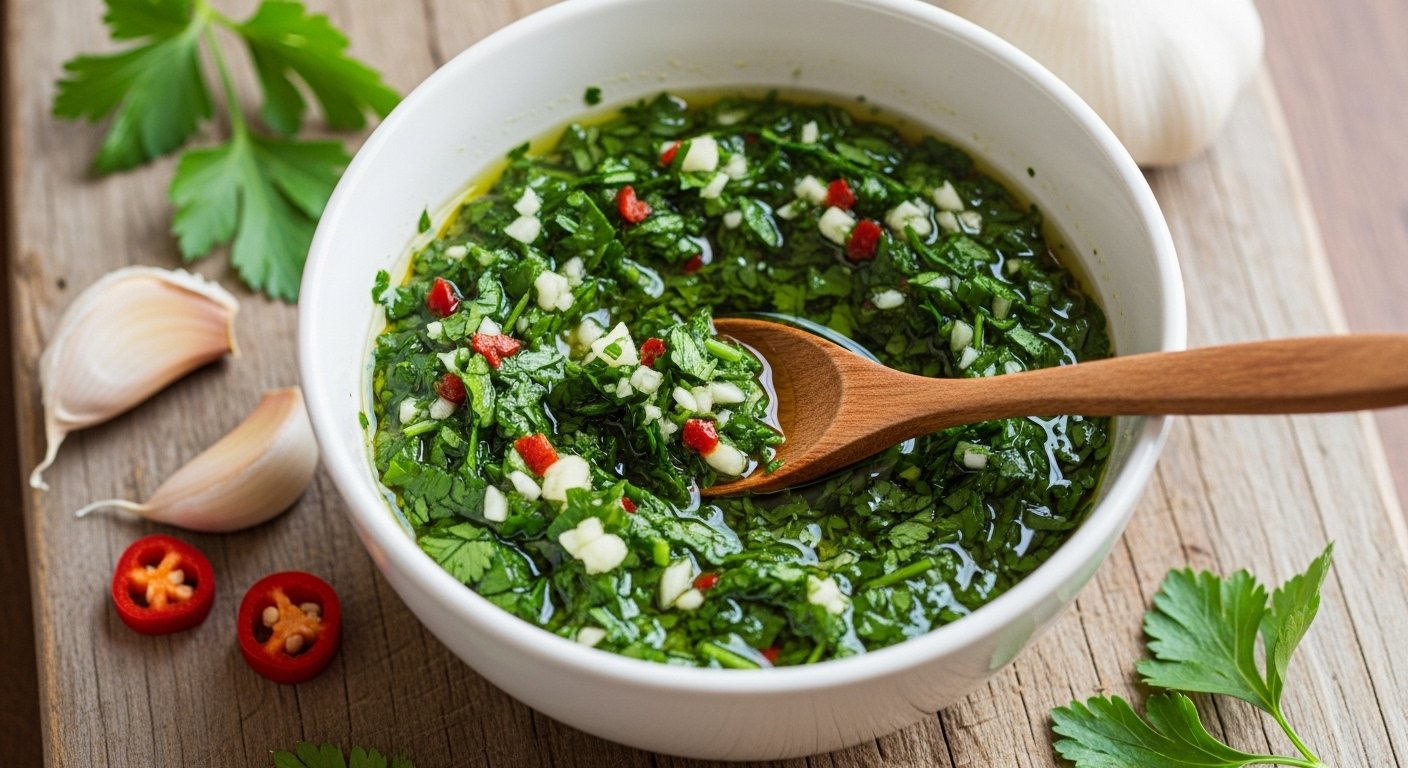
Chimichurri is a vibrant, uncooked herb sauce that originates from Argentina and Uruguay.
Traditionally served alongside grilled meats, especially steak, this sauce is known for its bold combination of fresh herbs, garlic, olive oil, and vinegar.
Recipe Overview
- Prep Time: 10 minutes
- Total Time: 10–15 minutes
- Servings: 6–8
- Difficulty Level: Easy
- Cuisine: Argentine
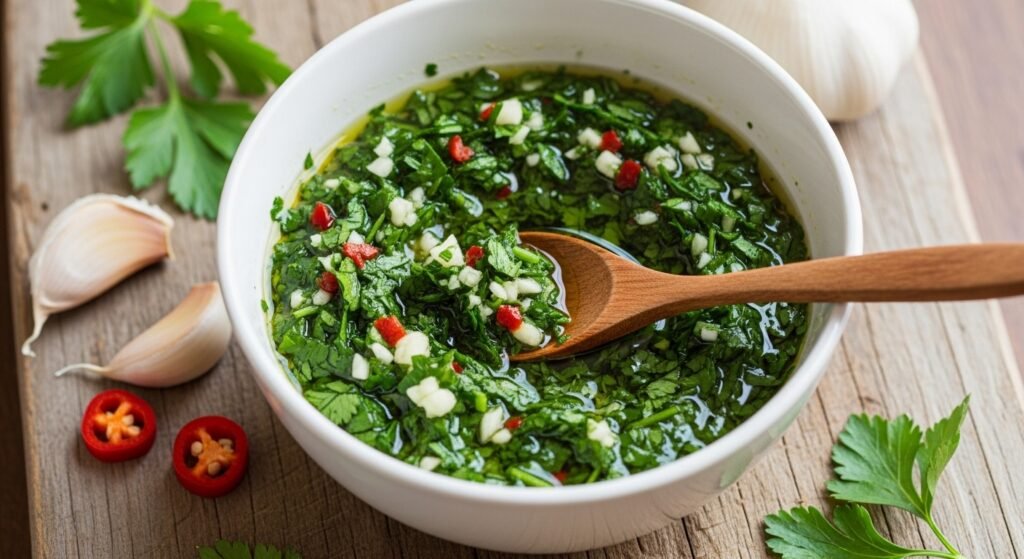
Unlike creamy sauces, chimichurri is light, oil-based, and packed with bright, tangy flavors.
It is widely used as both a condiment and a marinade, making it one of the most versatile sauces you can prepare at home.
Why Make Chimichurri at Home?
Making chimichurri at home is better than buying it for several reasons:
- You get maximum freshness
- No preservatives or artificial ingredients
- Easy to customize flavors
- Quick to prepare (under 15 minutes)
- Works with many dishes
Homemade versions always taste more vibrant and natural compared to packaged sauces.
Homemade vs Store-Bought Chimichurri
Homemade chimichurri is fresher, more flavorful, and customizable. Store-bought versions often lack brightness and may contain preservatives.
What Does Taste Like?
Chimichurri has a fresh, herbaceous flavor with a balance of tanginess, mild heat, and richness.
The parsley gives it a grassy freshness, garlic adds depth, vinegar provides acidity, and olive oil rounds everything out with a smooth finish.
Why You’ll Love This
This recipe stands out because it is quick, customizable, and incredibly versatile.
It requires no cooking, takes less than 15 minutes to prepare, and enhances a wide variety of dishes. Whether you are grilling meats or roasting vegetables, chimichurri instantly elevates your meal.
Origins of Chimichurri
Chimichurri has its roots in Argentine and Uruguayan cuisine, where it is commonly served with grilled meats during traditional barbecues known as asados.
Over time, it has become popular worldwide due to its simplicity and bold flavor.
Ingredients
| Ingredient | Quantity | Notes |
|---|---|---|
| Fresh parsley (flat-leaf) | 1 cup (packed) | Finely chopped |
| Garlic cloves | 3–4 cloves | Minced |
| Olive oil | ½ cup | Extra virgin preferred |
| Red wine vinegar | 2 tbsp | Can substitute lemon juice |
| Dried oregano | 1 tsp | Or fresh oregano |
| Red pepper flakes | ½ tsp | Optional for heat |
| Onion or shallot | 2 tbsp | Finely chopped |
| Salt | ½ tsp | Adjust to taste |
| Black pepper | ¼ tsp | Freshly ground |
Equipment Needed
| Equipment | Purpose |
|---|---|
| Sharp knife | For chopping herbs and vegetables |
| Cutting board | Safe chopping surface |
| Mixing bowl | Combine ingredients |
| Spoon or whisk | Mixing |
| Food processor (optional) | Faster preparation |
Ingredient Notes & Tips
Use fresh parsley for the best flavor. Flat-leaf parsley is preferred over curly parsley because of its stronger flavor.
Fresh garlic enhances the sauce significantly, and high-quality olive oil improves overall richness. Red wine vinegar adds the classic tang, but lemon juice can be used for a lighter citrus flavor.
How to Make Chimichurri (Step-by-Step)
Step 1: Prepare the Herbs
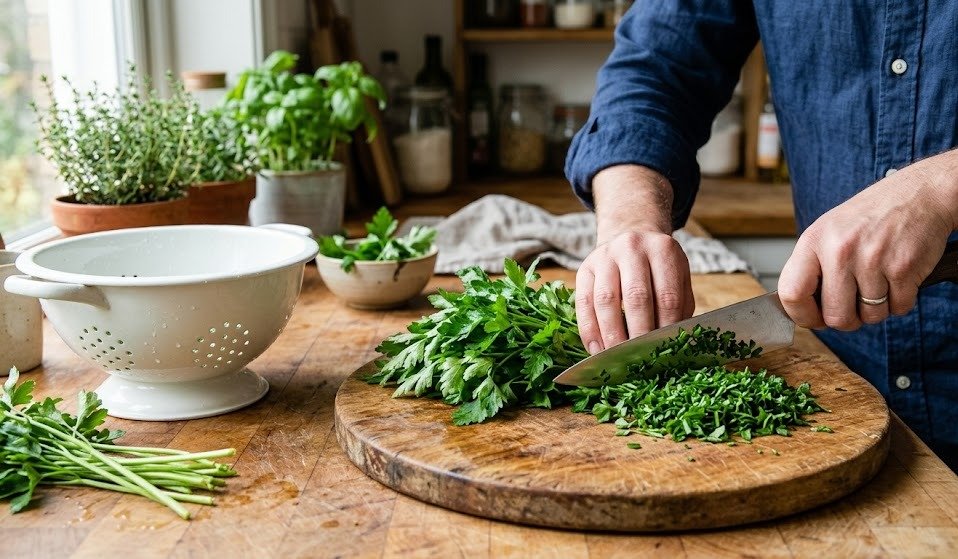
Wash the parsley thoroughly and pat it dry. Finely chop the leaves, avoiding thick stems which can taste bitter.
Step 2: Chop the Aromatics
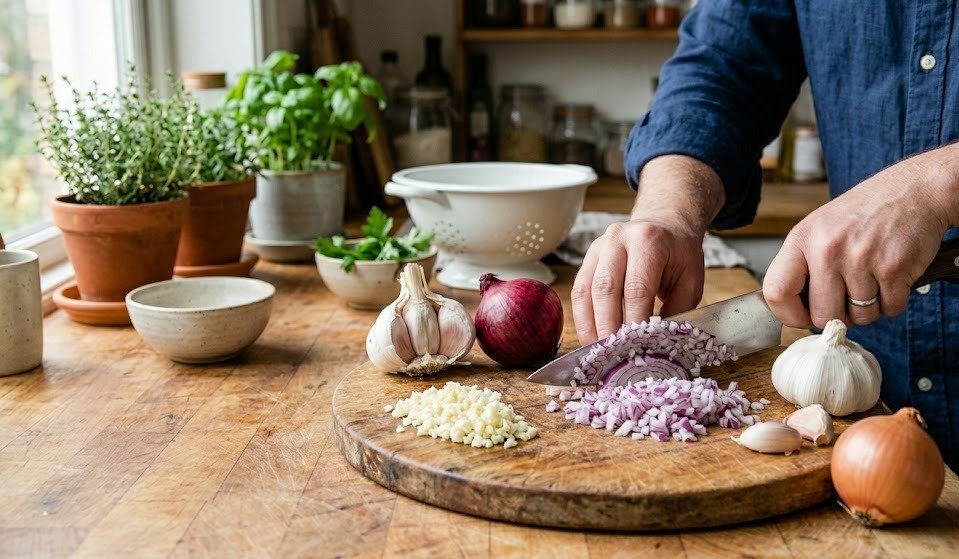
Mince the garlic and finely chop the onion or shallot. Keep everything small for a balanced texture.
Step 3: Mix the Base Ingredients
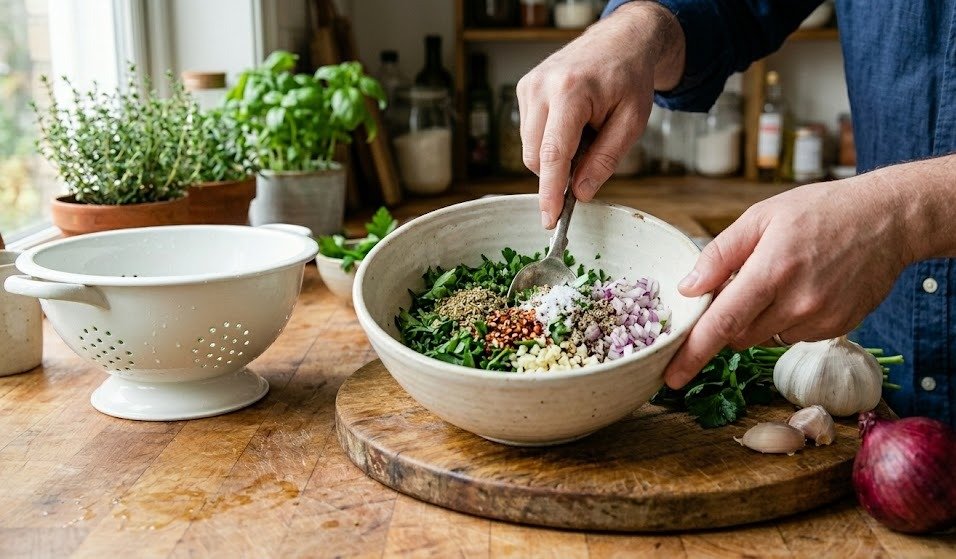
In a bowl, combine parsley, garlic, onion, oregano, red pepper flakes, salt, and black pepper.
Step 4: Add Vinegar
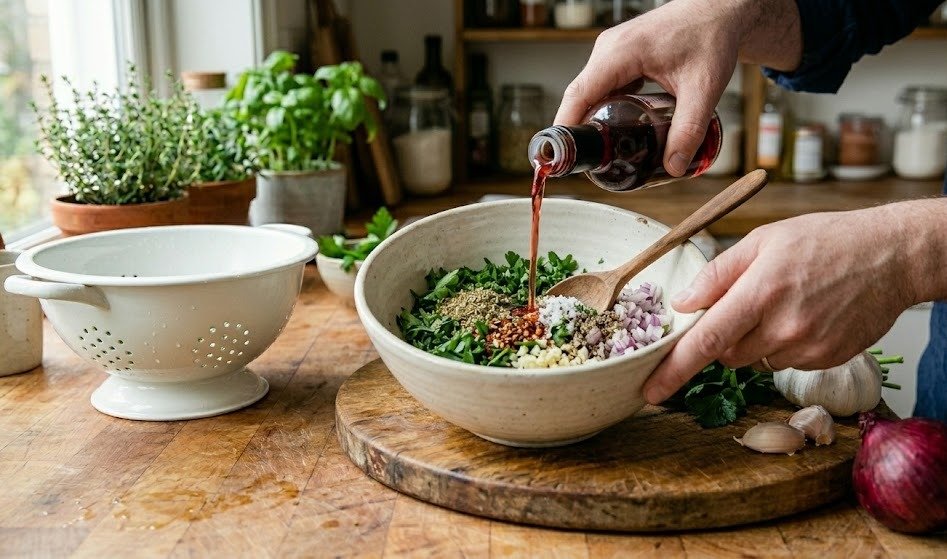
Pour in the red wine vinegar and stir well. This helps soften the raw garlic and onion.
Step 5: Add Olive Oil
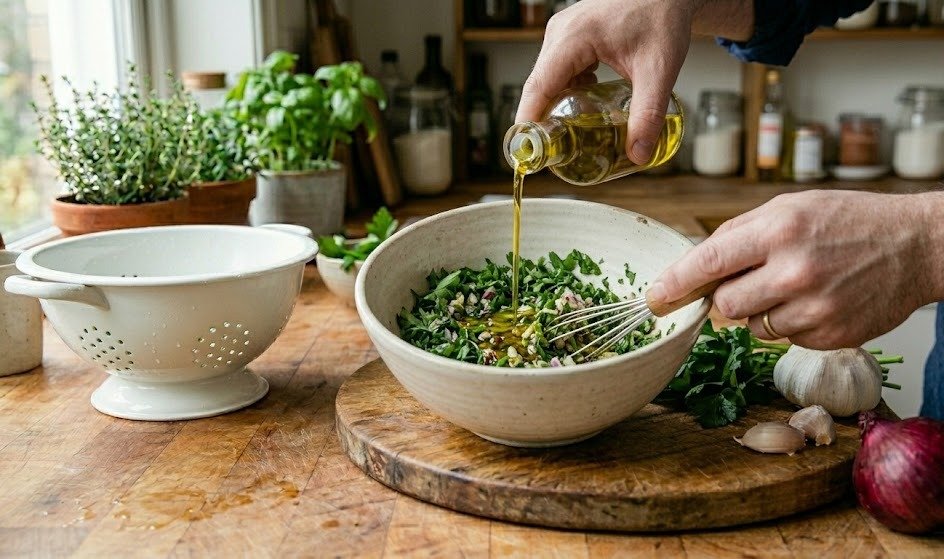
Slowly add olive oil while mixing. Ensure all ingredients are evenly coated.
Step 6: Let It Rest
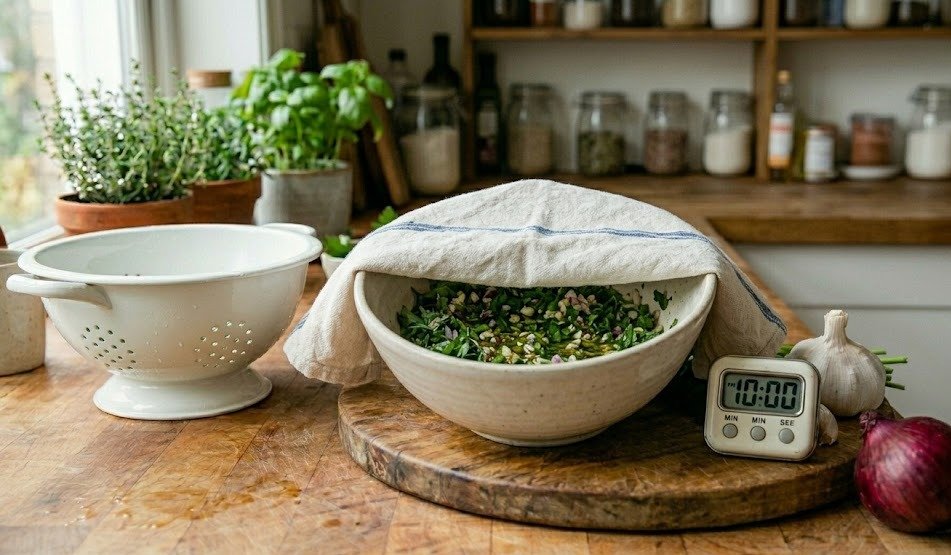
Allow the chimichurri to rest for 10–15 minutes. This step is crucial for flavor development.
Final Step: Taste & Adjust
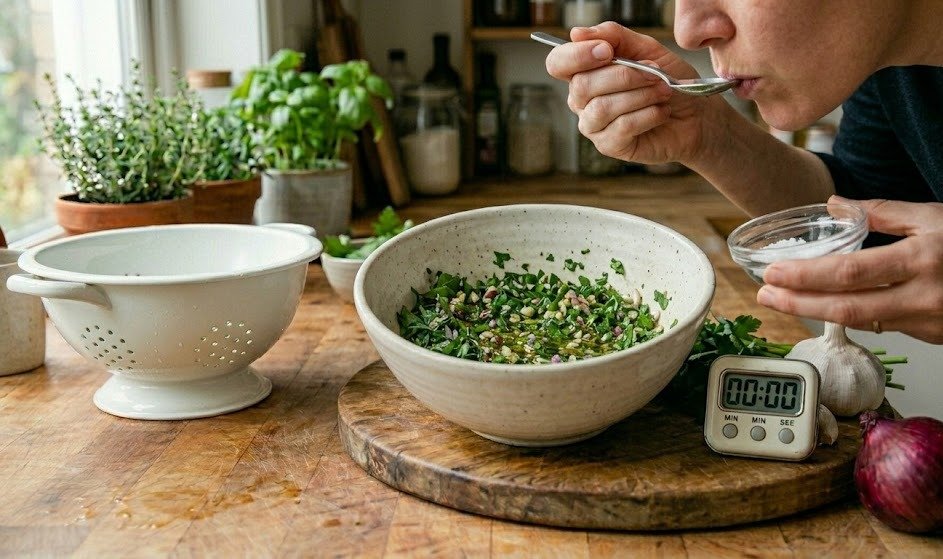
Taste the sauce and adjust salt, acidity, or spice according to your preference.
How to Make Without a Food Processor
You can easily make chimichurri by hand. Finely chop all ingredients and mix them in a bowl. This method gives a more traditional, chunky texture.
Tips for the Best Chimichurri
- Always use fresh herbs
- Do not overblend; keep it slightly chunky
- Let the sauce rest before serving
- Taste and adjust seasoning
- Use good-quality olive oil
Common Mistakes to Avoid
- Using dried parsley instead of fresh
- Over-processing into a paste
- Skipping resting time
- Adding too much garlic or vinegar
Chimichurri Variations
Green Chimichurri
The classic version made with parsley, garlic, and olive oil.
Red Chimichurri
Includes paprika or tomato paste for a deeper flavor.
Cilantro Chimichurri
Substitute part of parsley with cilantro for a citrusy twist.
Spicy Chimichurri
Add fresh chili or extra red pepper flakes.
Herb Substitutions
- Parsley → Cilantro or basil
- Oregano → Thyme or mixed herbs
- Red wine vinegar → Lemon juice or white vinegar
How to Serve
Chimichurri can be used in many ways:
- As a sauce over grilled steak
- As a marinade for chicken or seafood
- Drizzled over roasted vegetables
- Mixed into grain bowls
- Used as a sandwich spread
Best Pairings
With Meat
Pairs perfectly with steak, chicken, lamb, and pork.
With Seafood
Works well with shrimp, salmon, and white fish.
With Vegetables
Enhances roasted potatoes, zucchini, and peppers.
With Grains
Adds flavor to rice, quinoa, and salads.
Storage and Make-Ahead Tips
- Store in an airtight container in the refrigerator for up to 4–5 days
- Stir before serving as oil may separate
- Freeze in small portions for up to 3 months
- Bring to room temperature before use
Is Chimichurri Healthy?
Yes, chimichurri is a healthy sauce made from natural ingredients. It is free from processed additives and contains beneficial nutrients from herbs and olive oil.
Nutritional Benefits
- Rich in antioxidants from fresh herbs
- Contains heart-healthy fats from olive oil
- Provides vitamins A, C, and K
- Low in carbohydrates
- Naturally vegan and gluten-free
Nutritional Breakdown (Approx)
- Calories: 120–150 kcal
- Fat: 12–14 g
- Carbohydrates: 1–2 g
- Protein: <1 g
- Sodium: 200–400 mg
Chimichurri vs Pesto
While both are herb-based sauces, pesto uses basil, cheese, and nuts, making it richer. Chimichurri is lighter, dairy-free, and more acidic due to vinegar.
Chimichurri vs Salsa Verde
Salsa verde varies by region and may include tomatillos or anchovies, while chimichurri is strictly herb-based with oil and vinegar.
Homemade vs Store-Bought Chimichurri
Homemade chimichurri is fresher, more flavorful, and customizable. Store-bought versions often lack brightness and may contain preservatives.
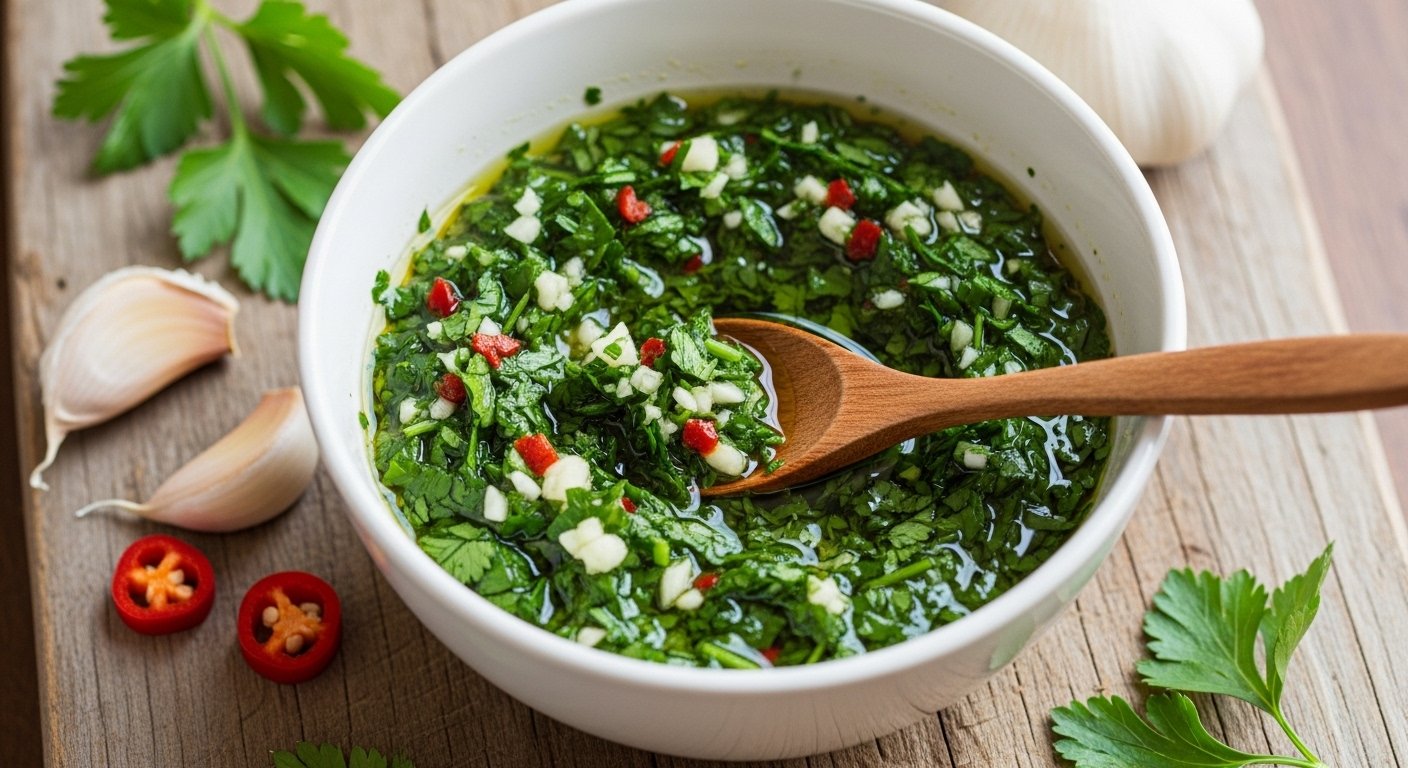
Homemade Chimichurri Recipe
Ingredients
Equipment
Method
- Wash and dry the parsley, then finely chop it.

- Mince the garlic and finely chop the onion or shallot.

- Add parsley, garlic, onion, oregano, chili flakes, salt, and pepper to a bowl.

- Pour in the red wine vinegar or lemon juice and mix well.

- Slowly add olive oil and stir until fully combined.

- Let the chimichurri rest for 15 minutes to develop flavor.

- Taste and adjust seasoning before serving.

Notes
- Use only fresh parsley for best flavor.
- Do not over-blend; keep texture slightly chunky.
- Adjust vinegar, salt, and spice to taste.
- Store in fridge up to 5 days or freeze in small portions.
Youtube Videos
FAQs:-
Can I make chimichurri ahead of time?
Yes, homemade chimichurri tastes even better after a few hours or overnight.
How long does homemade chimichurri last?
It stays fresh in the fridge for about 4–5 days in an airtight container.
Can I use dried parsley instead of fresh?
No, fresh parsley is essential for the correct flavor and texture.
Is chimichurri spicy?
It can be mild or spicy depending on how much chili or pepper you add.
Can I freeze homemade chimichurri?
Yes, freeze it in small portions (like ice cubes) for up to 3 months.
Conclusion:-
Homemade chimichurri is one of the simplest yet most flavorful sauces you can make. With just a handful of fresh ingredients and a few minutes of preparation, you can create a versatile condiment that enhances nearly any dish.
Its bold, fresh taste and adaptability make it a kitchen staple. Once you try making it yourself, it will likely become a go-to sauce for everyday meals and special occasions alike.
