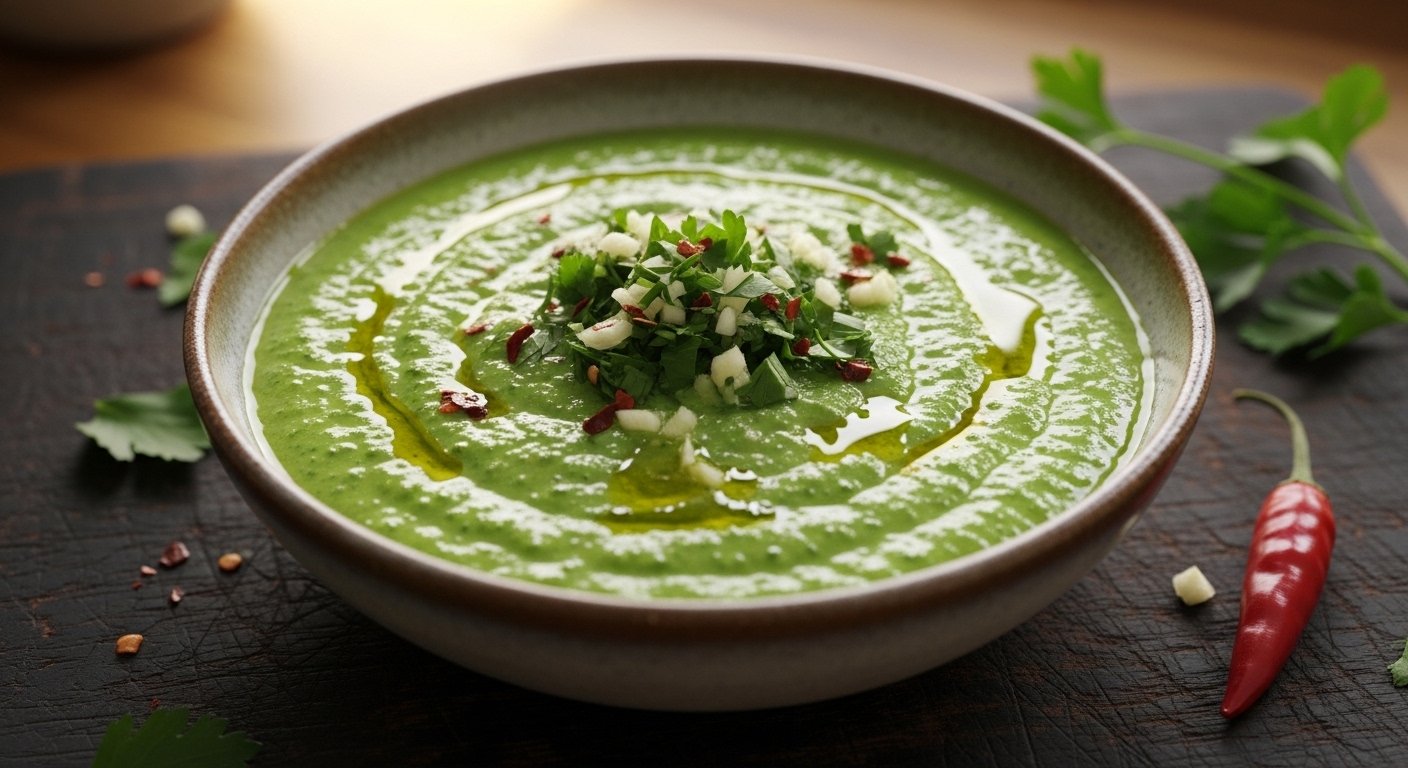
Creamy chimichurri sauce is a delicious twist on the classic Argentinian condiment, bringing together fresh herbs, tangy acidity, and a rich, velvety texture.
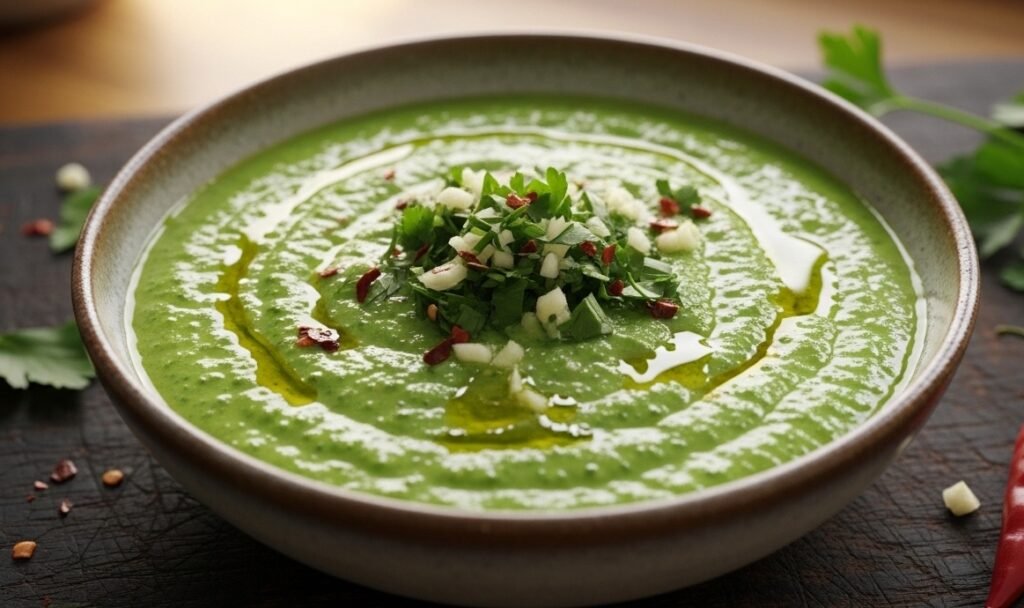
While traditional chimichurri is known for its bold and sharp flavor, this creamy version softens those edges and makes the sauce more versatile.
It works beautifully as a dip, dressing, or finishing sauce, adding freshness and depth to everything from grilled meats to vegetables and even grain bowls.
What Is Creamy Chimichurri Sauce?
Creamy chimichurri sauce is a variation of the traditional herb-based condiment, enhanced with ingredients that create a smooth and rich consistency.
Unlike the classic version, which is oil-based and slightly chunky, this one blends herbs with creamy elements like yogurt, sour cream, avocado, or even nuts.
The result is a balanced sauce that feels lighter on the palate while still delivering bold flavor.
What Is Traditional Chimichurri Sauce?
Traditional chimichurri is an uncooked sauce made from parsley, garlic, vinegar, olive oil, and spices. It originated in Argentina and is most commonly served with grilled meats.
Its texture is loose and slightly coarse, with a strong herbal and tangy taste that cuts through rich foods.
Origin of Chimichurri Sauce
Chimichurri has its roots in Argentina, where it plays a central role in barbecue culture. It is typically served alongside grilled steak, chicken, and sausages, either as a marinade or a finishing sauce.
Over time, different regions and home cooks have adapted the recipe, leading to variations like the creamy version that cater to modern tastes and dietary preferences.
Why This Is So Popular
The creamy version has become increasingly popular because it offers a smoother texture and a more approachable flavor.
The added creaminess reduces the sharpness of vinegar and garlic, making it appealing to a wider audience.
It also works across multiple types of dishes, from casual snacks to full meals, which adds to its versatility.
What Makes This Chimichurri Sauce “Creamy”?
The creaminess comes from blending traditional ingredients with a rich base.
This can include sour cream or Greek yogurt for a tangy richness, avocado for a naturally smooth texture, or soaked cashews for a dairy-free alternative. These ingredients help mellow the acidity while creating a silky consistency.
Why You’ll Love This
This sauce is quick to prepare and requires no cooking, making it ideal for busy days. It’s highly customizable, so you can adjust flavors based on your preference.
Whether you prefer dairy-free, vegan, or low-calorie options, this recipe adapts easily. It also pairs well with a wide variety of cuisines, making it a reliable addition to your kitchen.
Flavor Profile
The flavor of this sauce is layered and balanced. The fresh herbs bring brightness, while vinegar and citrus add tang.
Garlic provides depth, and a hint of chili gives mild heat. The creamy component ties everything together, resulting in a smooth, rich, and refreshing taste.
Ingredients
| Ingredient | Quantity | Purpose |
|---|---|---|
| Fresh parsley | 1 cup | Base herb flavor |
| Fresh cilantro | ½–1 cup | Adds brightness |
| Garlic cloves | 2–4 | Sharp flavor |
| Red wine vinegar | 1–2 tbsp | Tanginess |
| Lemon or lime juice | 1–2 tbsp | Fresh acidity |
| Olive oil | 2–4 tbsp | Smooth texture |
| Sour cream / yogurt | ½–1 cup | Creaminess |
| Red pepper flakes | ¼ tsp | Heat |
| Salt | To taste | Flavor enhancer |
| Black pepper | To taste | Mild spice |
Equipment Needed
| Equipment | Purpose |
|---|---|
| Blender or food processor | Blending ingredients |
| Knife | Chopping herbs |
| Cutting board | Prep surface |
| Measuring tools | Accuracy |
| Bowl | Mixing |
| Airtight container | Storage |
Substitutions and Flexibility
This recipe is very forgiving. You can swap sour cream with Greek yogurt if you want a lighter version. For a vegan option, cashew cream or almond milk works well.
If parsley isn’t available, herbs like basil or arugula can be used to create a slightly different flavor profile.
Even the vinegar can be adjusted depending on taste, with apple cider vinegar offering a milder tang.
Variations
There are several ways to adapt this sauce depending on dietary needs. A dairy-free version can be made using cashew cream or plant-based yogurt.
For a vegan approach, blending soaked cashews with herbs creates a creamy base. If you prefer a paleo-friendly version, avocado works perfectly.
A lighter version can be achieved using low-fat yogurt, while a nut-free version can rely entirely on avocado.
How to Make Creamy Chimichurri Sauce
Step 1
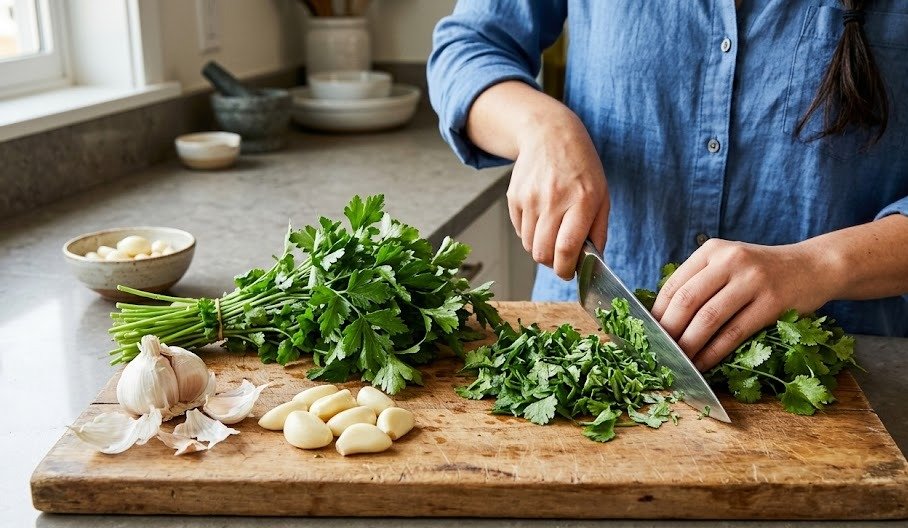
Wash and roughly chop parsley and cilantro, then peel the garlic cloves.
Step 2
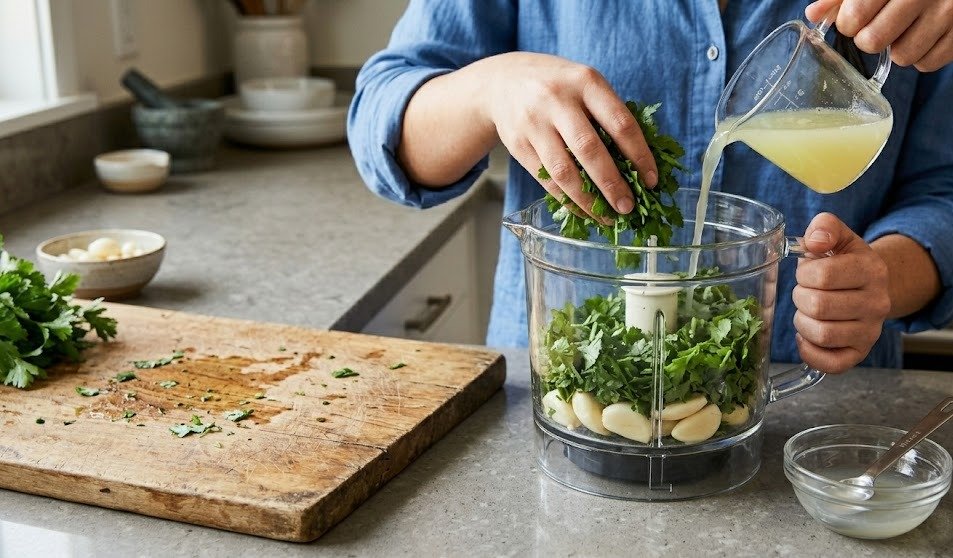
Add the herbs, garlic, vinegar, and citrus juice to a blender or food processor.
Step 3
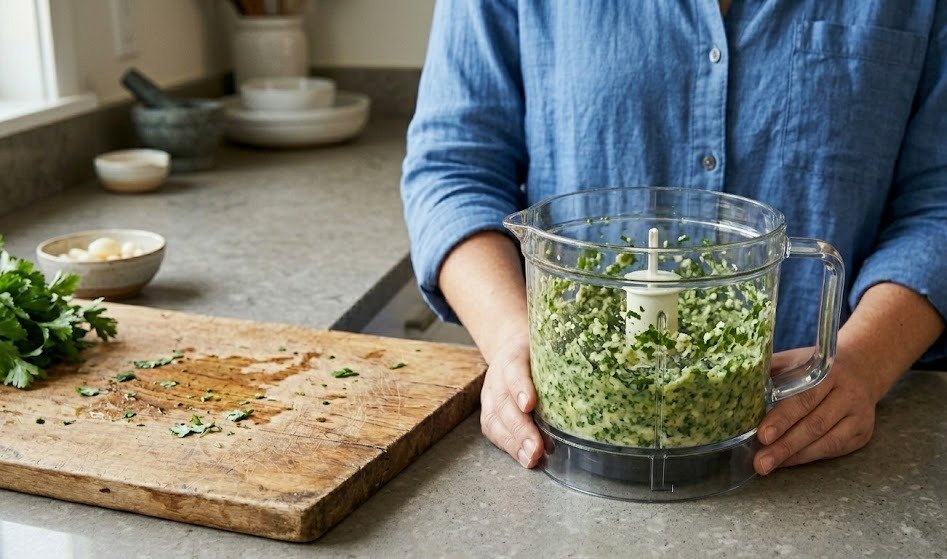
Pulse until the mixture is finely chopped but not completely smooth.
Step 4
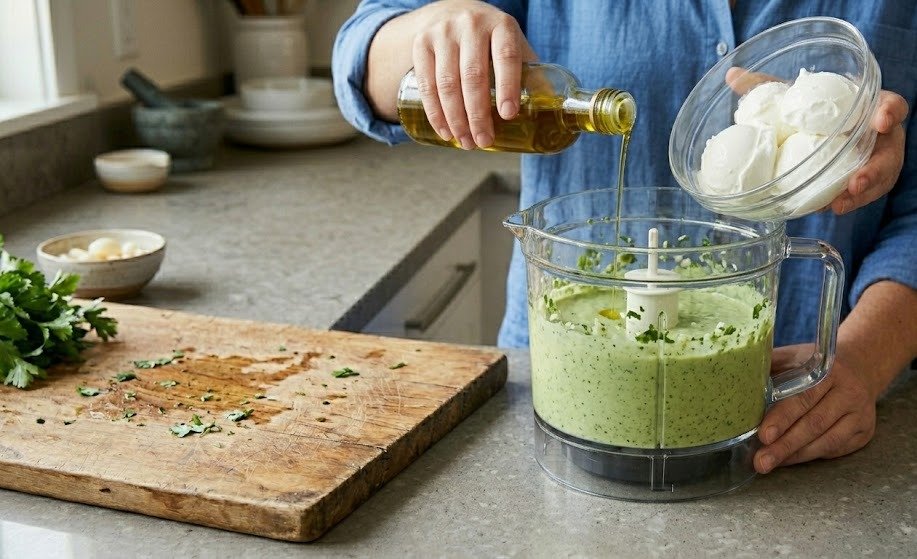
Add olive oil and your creamy ingredient (sour cream, yogurt, or avocado), then blend until smooth and creamy.
Step 5

Taste and adjust seasoning, then refrigerate for 15–30 minutes before serving.
Texture and Flavor
Achieving the right texture depends on balance. If the sauce feels too thick, a small amount of water or milk can help loosen it.
If it’s too thin, adding more yogurt or avocado will thicken it. Avoid over-blending, as this can dull the fresh herb flavor. Letting the sauce sit before serving enhances its taste significantly.
Common Mistakes to Avoid
Using dried herbs instead of fresh ones can result in a dull flavor. Adding too much vinegar can overpower the sauce, while over-blending can turn it into a paste.
Skipping the resting time is another common mistake, as the sauce tastes much better once the flavors have had time to combine.
Storage & Shelf Life
Creamy chimichurri sauce should be stored in an airtight container in the refrigerator. It typically stays fresh for about 4 to 7 days.
If you want to store it longer, freezing is an option, and it can last up to a few months. Over time, the flavor may intensify, and the color may darken slightly, which is normal.
Serving Suggestions
This sauce is incredibly versatile and can be used in many ways. It works well drizzled over grilled meats like steak or chicken, but it’s equally delicious as a dip for vegetables or chips.
It can also be spread on sandwiches or wraps to add a burst of flavor.
For vegetarian options, it pairs beautifully with roasted potatoes, tofu bowls, or grain salads. It can even be used creatively as a pasta sauce base or a drizzle over pizza.
Nutritional Benefits
Creamy chimichurri sauce offers several nutritional advantages, especially when made with fresh ingredients.
Herbs provide antioxidants and vitamins, while ingredients like yogurt or avocado contribute healthy fats and nutrients.
Nutritional Information (Approximate per serving)
- Calories: 80–120 kcal
- Protein: 1–3 g
- Fat: 7–10 g
- Carbohydrates: 2–5 g
- Fiber: 1 g
Creamy vs Traditional Chimichurri
The main difference lies in texture and richness. Traditional chimichurri is oil-based and sharp, while the creamy version is smooth, mild, and more balanced. Both have their place, but the creamy version is often preferred for its versatility.
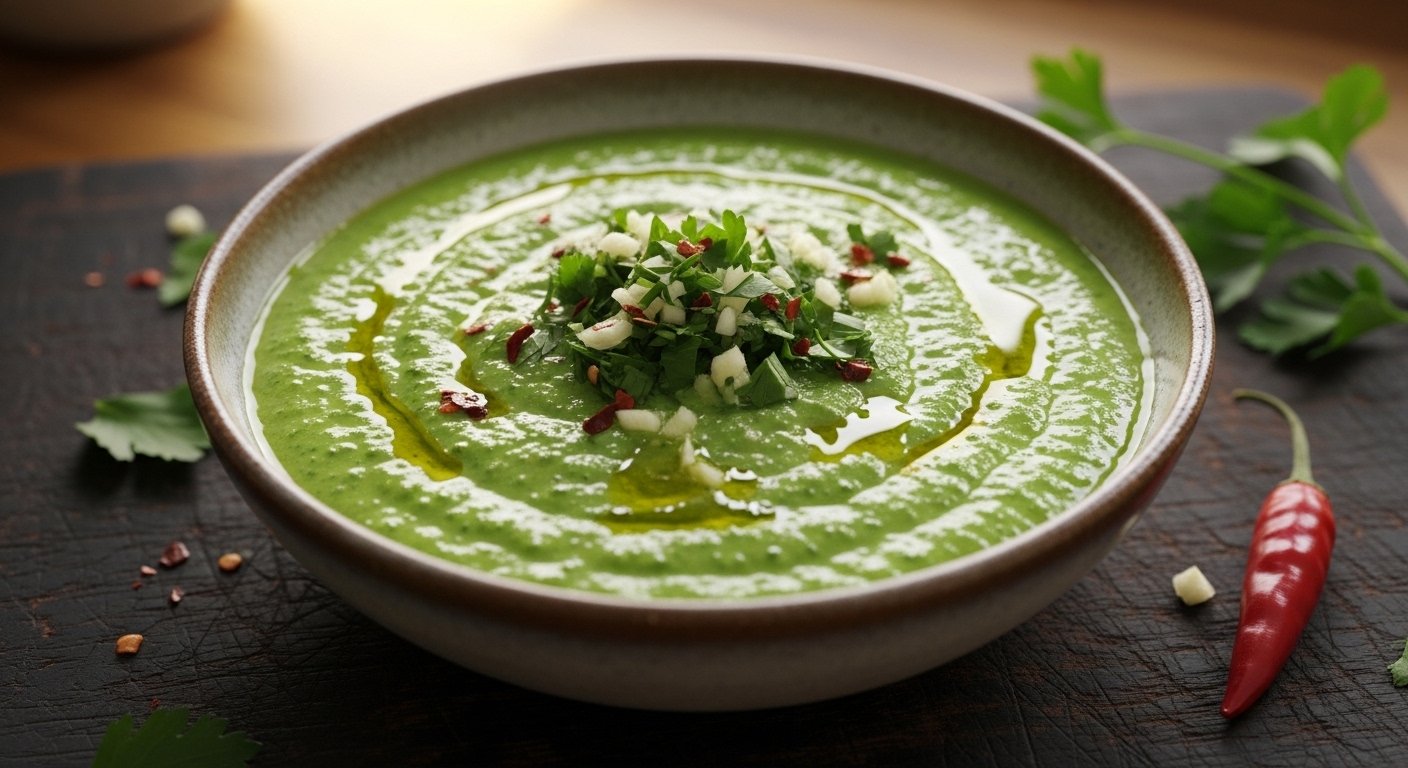
Creamy Chimichurri Sauce Recipe
Ingredients
Equipment
Method
- Wash and roughly chop the parsley and cilantro to make blending easier.

- Peel the garlic cloves and set aside.

- Add parsley, cilantro, garlic, vinegar, and lemon juice into a blender or food processor.

- Pulse the mixture until the herbs are finely chopped but not fully pureed.

- Add olive oil and sour cream (or Greek yogurt).

- Blend again until the sauce becomes smooth and creamy.

- Taste the sauce and adjust salt, pepper, or acidity according to your preference.

- Transfer to a bowl and refrigerate for about 15 minutes before serving for best flavor.

Notes
- For a dairy-free version, use avocado or soaked cashews instead of yogurt.
- Add a little water or milk to thin the sauce if needed.
- The flavor improves after resting, so don’t skip the chilling step.
Youtube Videos
FAQs:-
What is creamy chimichurri sauce made of?
It’s made with fresh herbs (like parsley and cilantro), garlic, vinegar or citrus juice, olive oil, and a creamy ingredient such as yogurt, sour cream, avocado, or cashews.
How long does creamy chimichurri last in the fridge?
It stays fresh for about 4 to 7 days when stored in an airtight container in the refrigerator.
Can I make creamy chimichurri without dairy?
Yes, you can use avocado, soaked cashews, or plant-based yogurt as a dairy-free alternative.
What does creamy chimichurri taste like?
It tastes fresh, tangy, slightly garlicky, and mildly spicy with a smooth and rich texture.
What can I use creamy chimichurri sauce for?
You can use it as a dip, salad dressing, sandwich spread, or drizzle it over grilled meats, vegetables, and bowls.
Conclusion
Creamy chimichurri sauce is a modern and adaptable version of a classic condiment. Its smooth texture and balanced flavor make it suitable for a wide range of dishes. Whether you prefer a dairy-based, vegan, or avocado version, this sauce is easy to customize and even easier to enjoy. It’s a simple way to elevate everyday meals with fresh, vibrant flavor.
